

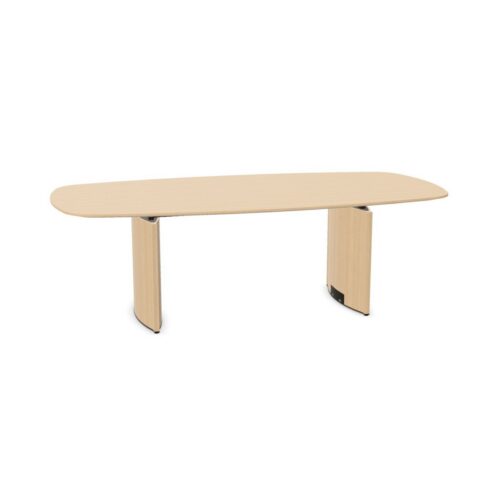
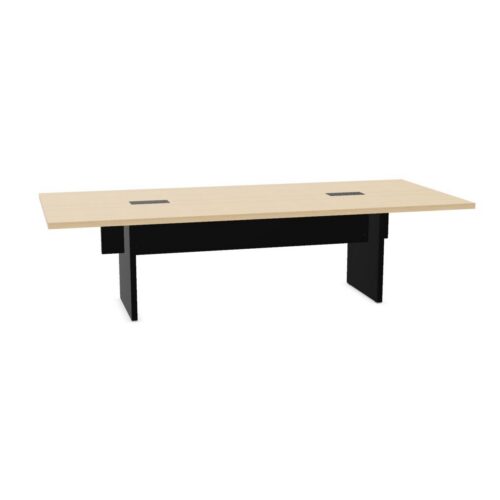
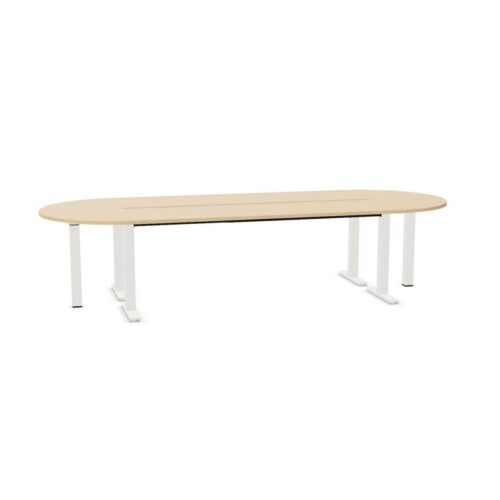
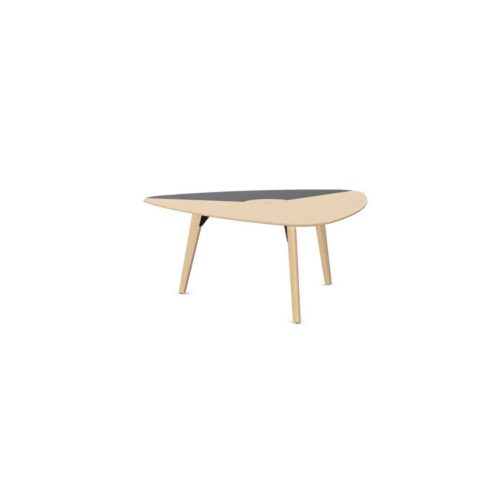
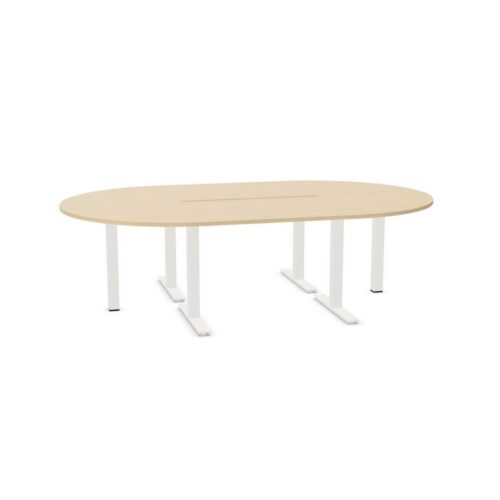
Silver Bases Supporting Oval Meeting Tops

Conference tables with oval tops and silver bases combine a curved meeting outline with a base color that can be coordinated with other visible room details. Silver describes the selected color, rather than confirming a metal, surface treatment or reflective quality. Keep those distinctions clear when considering how the base will relate to chair frames, storage and shared equipment. The oval top establishes the perimeter, while its color and material remain separate considerations.

Plan the room around the way meetings move between conversation and presentation. Chairs along the sides and around the curved ends need useful sightlines, accessible positions and clear routes behind them. Once that arrangement is established, assess how the silver base fits into the whole view. A close color relationship with surrounding details may be appropriate, or the base may work as a visible contrast against the floor and seating.

4 models
From €6.03 p/m
8 models
From €12.16 p/m
8 models
From €30.83 p/m
7 models
From €21.96 p/m
30 models
From €16.42 p/m
5 models
From €25.05 p/m
2 models
From €31.86 p/m
2 models
From €31.28 p/m
2 models
From €35.10 p/m
3 models
From €29.36 p/m
13 models
From €8.10 p/m
2 models
From €34.54 p/m
€33.74 p/m
€30.46 p/m
28 models
From €18.24 p/m
2 models
From €85.07 p/m
9 models
From €6.46 p/m
12 models
From €55.42 p/m
7 models
From €10.56 p/m
18 models
From €19.86 p/m
6 models
From €10.56 p/m
7 models
From €10.56 p/m
5 models
From €8.34 p/m
8 models
From €23.66 p/m

Compare Conference Tables With Oval Tops and Silver Bases

Start by separating the decisions already established from those that still need review. The tabletop is oval and the base color is silver. These properties do not confirm the support structure, surface sheen or material of either part. For room planning, use the oval outline to explore seating and the silver color to consider visual coordination. Then assess the remaining characteristics on their own terms. This sequence is useful when nearby chair frames or equipment also appear silver, because a shared color name does not guarantee the same appearance or construction across different elements within the meeting room.

Check Presentation Views Around the Oval

Locate the shared display or presentation area before finalizing chair positions. People seated around a curved end may need to turn differently from those along the sides, and a symmetrical arrangement does not automatically provide equivalent views. Walk through the expected meeting activities from each intended position. Consider whether participants can alternate between looking at colleagues and viewing shared content without rearranging the room. Keep access to the presentation area clear for whoever is speaking. The table's outline is part of this planning, but the final result depends on its relationship with the room and the occupied chairs.

Coordinate Silver Without Assuming a Finish

Compare the base with surrounding silver-colored details as they actually appear. A close relationship may help connect the table with chair frames or nearby furniture, while a visible difference can be acceptable when it looks intentional. Do not infer a polished or matte surface from the color alone. The same caution applies when considering room lighting: evaluate the established appearance rather than assuming how silver will reflect it. View the base against the floor and through the chair arrangement, since these are the surfaces closest to it. Keep the overall composition coherent without requiring every silver element to be identical.

Make Circulation Work With Occupied Chairs

Conference tables with oval tops and silver bases need a layout that works once participants arrive. Trace the path from the entrance around the chairs, including the positions near each curved end. Check whether someone can reach storage or leave a meeting without turning the space behind another chair into the only route. Review the base beneath every intended seating position rather than assuming the oval top ensures unrestricted legroom. Color coordination can be assessed after these movement patterns are clear. A table that relates visually to the room still needs an arrangement that supports the ordinary transitions before, during and after a meeting.

Frequently Asked Questions

Does silver mean the base is metal?

No. Silver is the selected base color and does not establish its material. It also does not confirm whether the surface is reflective, polished or matte, so assess any relevant characteristics independently.

Must silver chair frames match the base?

An exact match is optional. Compare the actual appearances together and decide whether they create a deliberate relationship. The floor, upholstery and tabletop appearance also affect how closely the silver details seem connected.

Which practical checks should come first?

Review conference tables with oval tops and silver bases for presentation views, chair access and the support arrangement beneath intended seats. Resolve those relationships before allowing a preferred visual alignment to determine the layout.

Explore related selections