



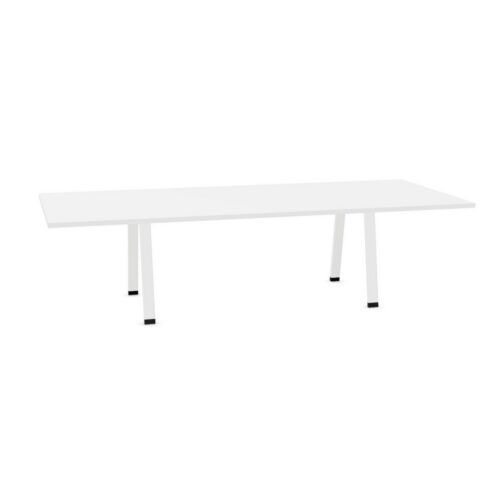


Assessing Conference Tables With Rectangular Tops and Beige Bases
Begin with the room elements that will remain around the table. Compare the beige base with the floor, chairs and nearby storage before deciding whether to repeat its color elsewhere. Beige surfaces can appear different beside one another, so a shared description is not enough to establish a match. Consider whether a close relationship is needed or whether a visible difference better suits the arrangement. View the base in the lighting normally used for meetings, then assess it from the entrance. The rectangular top organizes the area above the supports, while the beige contributes another relationship within the surrounding palette without determining the entire room.
Positioning the Table Around Existing Room Functions
An established meeting room may already have a display, storage and a familiar route from the entrance. Use those functions to test the table orientation. The straight sides can follow the room's direction, but that alignment should also allow useful views and practical access. Consider where people pause on arrival and where they move to consult shared information. Avoid placing a corner directly in a frequently used turning route if another arrangement works better. Include chairs in the plan from the beginning, allowing for their occupied positions. This makes it easier to assess how the rectangular surface relates to actual movement through the room.
