

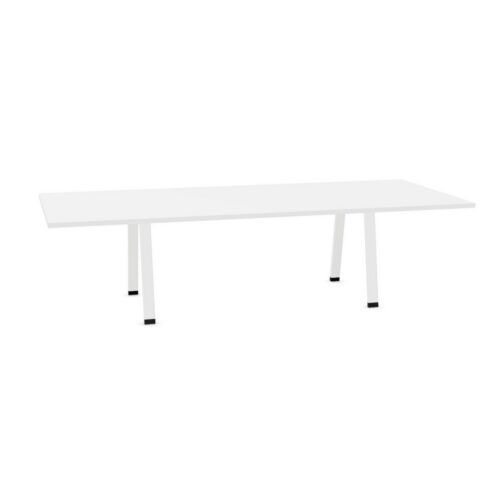
Blue Bases With Rectangular Meeting Tops

Conference tables with rectangular tops and blue bases pair a familiar meeting outline with color beneath the surface. The straight edges give you a clear framework for organizing discussion, while the blue can connect the table to seating, wall details or other existing accents. The useful question is where that connection should appear in the room, rather than how many surrounding items can repeat it.

Plan the tabletop around the meeting activity before deciding how strongly to repeat the base color. Opposing chairs may support conversation across the surface; a presentation arrangement also needs attention to screen views and turning positions. Blue remains a visual characteristic, so assess the base’s actual placement separately when checking chair access. Look at the proposed arrangement from the entrance and from seated positions. The base may be more visible from some viewpoints than others, which affects how its color participates in the room.

11 models
From €21.26 p/m
3 models
From €20.05 p/m
2 models
From €28.04 p/m
€31.41 p/m
€11.34 p/m
2 models
From €19.95 p/m
2 models
From €10.48 p/m

Conference Tables With Rectangular Tops and Blue Bases in Context

Begin with the blue elements already present in the room. They might appear in seating, a wall detail or a nearby shared area. Decide whether the base should continue that relationship or introduce blue in a distinct place. A close color match is only one option; deliberate variation may also work when assessed together. Because the color sits beneath a rectangular top, chairs can change how much of it is visible. Review the arrangement as it will normally be used, with seating in place. This gives a more useful impression than judging the base separately from the furniture that surrounds it during meetings.

Using the Straight Edges for Discussion

Arrange the table around the way people exchange information. For discussion across the surface, consider the relationship between chairs on opposing sides and whether documents can be shared without awkward movement. When a facilitator uses an end position, check that this supports the meeting rather than creating an unnecessary focal point. The rectangular outline makes these alternatives easy to identify, but it does not settle them. Include the entrance in the plan so late arrivals can reach a chair without crossing the main presentation view. Leave room for people to step back from the table and rejoin the conversation without disrupting neighboring seats.

Giving the Blue Accent a Clear Role

Blue-base rectangular conference tables can provide a visual connection between the meeting area and adjacent workplace spaces. If the room opens onto a shared area, look at the colors visible through the doorway as well as those inside. Repeating blue nearby can make that connection deliberate, although repeating it on every surface may leave the room without a clear emphasis. Consider whether chairs should continue the accent or provide a different visual reference. Judge the result in normal lighting and alongside the floor. The aim is a considered relationship between existing elements, with the rectangular surface retaining a clear place in the overall arrangement.

Testing the Layout During Presentation Use

A room that alternates between conversation and presentations needs a plan for both activities. Check screen views from the intended chair positions, including those nearest the display. Consider where the presenter stands and how others move toward shared equipment. For rectangular meeting tables with blue bases, the color can remain consistent across these uses while the practical assessment focuses on orientation and access. Inspect the support arrangement beneath the top before finalizing chairs, since color does not establish legroom. Also review the path behind occupied seats. A successful plan should accommodate the transition between looking at colleagues and looking toward the presentation area.

For conference tables with rectangular tops and blue bases, map the intended seats before deciding how the table will sit within the room.

Keep conference tables with rectangular tops and blue bases in view while comparing placement, access and the surrounding interior.

FAQ: Blue Bases and Meeting Room Coordination

Must the blue base match the wall color?

No. View the colors together and decide whether matching or contrast better suits the room. A related blue elsewhere can provide a connection without requiring identical colors throughout the space.

How can the base color remain visible around chairs?

Assess the table with the intended chairs in position and view it from the entrance. Choose the seating arrangement for practical use first, then judge the visible balance of color.

Is blue enough to distinguish the meeting area?

Rectangular conference tables with blue bases can contribute a recognizable color reference. Their position, surrounding circulation and relationship with shared equipment also determine how clearly the meeting area is understood.

Explore related selections