



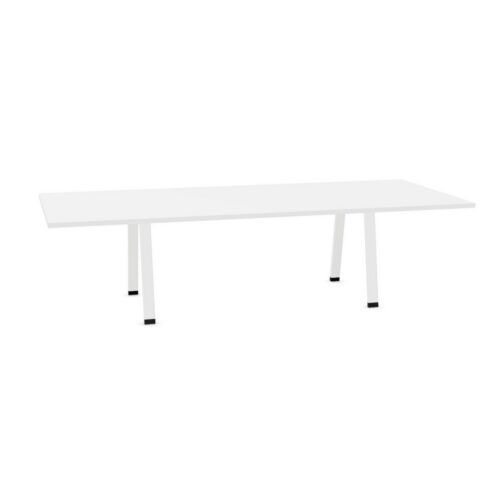


Organize Conference Tables With Rectangular Tops and Green Surfaces
Workshop planning starts with how people exchange ideas and materials. Around a rectangular top, participants may work across opposing sides, turn toward a shared wall or gather attention around a document. Choose the arrangement that reflects the main activity. The green surface gives the working area a consistent color, but the agenda should determine where people sit and where shared materials belong. Consider how the arrangement changes between discussion and individual note-taking. A clear plan helps participants keep their own work organized while following the group's current point of attention.
Distinguish the Table From Other Green Elements
Green rectangular conference tables may share a room with plants, artwork or green wall finishes. Compare those elements as a group instead of assuming the colors will naturally coordinate. A tabletop and a nearby wall can appear quite different even when both are described as green. Decide whether the table should connect those elements or stand apart from them. Consider the view from seated positions as well as the entrance. Green is a color choice here; it does not establish an environmental credential, a material type or a particular effect on participants.
Leave Working Routes Around Every Active Side
Collaborative meetings often involve people standing to refer to a board or moving between their chair and shared resources. Check those routes with the rectangular table in place and the chairs occupied. Corners deserve attention where routes change direction. If a side is used frequently for access, make sure the seating arrangement reflects that activity. Rectangular meeting tables with green surfaces should fit the movement pattern of the workshop, including access to wall-based work. Avoid arranging the room solely for the appearance of a neatly centered table with all chairs tucked away.
