



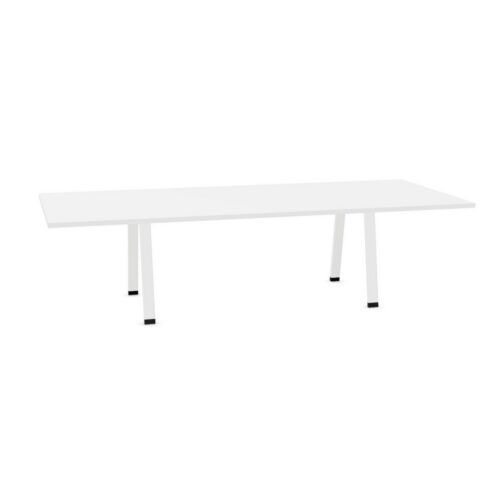


Connecting Conference Tables With Green Surfaces
Map the room's existing color relationships before adding another green element. A green surface can connect with nearby upholstery or contrast with a neutral background. If a wall already carries green, look at the tabletop and wall together from seated positions to judge how much of the color enters the everyday view.
Avoid assuming that unrelated green elements will coordinate simply because they share a name. Compare their actual appearance, including how warm, cool, light or dark they seem beside each other. An intentional difference can be as useful as a close relationship when the surrounding palette supports it.
Separate Planting From Practical Access
If plants are part of the room, consider their placement alongside the table color. They can provide another green reference without needing to sit on the meeting surface. Assess the room from the entrance and from each seating position to understand how these separate elements relate visually.
Keep planting and other decorative objects away from essential routes and presentation views. On the tabletop, shared materials need to remain accessible during discussion. Decide where decoration belongs after establishing chair access and working areas, so a coordinated green palette does not introduce obstacles into the meeting arrangement.
