



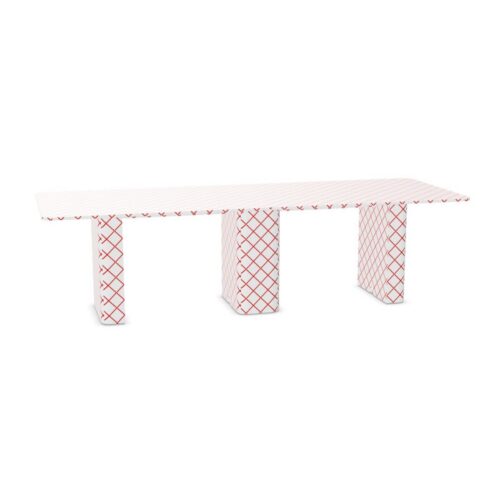


Style Conference Tables With Rectangular Tops and Pink Surfaces
Start by deciding what role pink should play in the room. It may be a distinct accent within neutral surroundings or part of a palette that already includes related colors. The rectangular top creates a clear central form, so its color will be seen in relation to the chairs along its sides and ends. Assess those elements together. Avoid assigning a particular working culture or meeting behavior to pink. The relevant visual decision is how the tabletop relates to the room, while the relevant practical decision is how people use the arrangement.
Compare Chairs as Part of the Complete Group
Chairs strongly affect the appearance of pink rectangular conference tables because they surround the colored surface. Compare the chair color against both the tabletop and the floor. A clear difference can define the seating positions, while related colors create a closer visual grouping. Neither approach establishes how comfortable the seating will be, so keep that assessment separate. Look at the arrangement from the entrance and from seated positions. Include any existing storage in the comparison, particularly when it sits directly behind the chairs and becomes part of the same view.
Support Discussion Without Prescribing a Head Position
A rectangular outline provides distinct ends, but those positions do not have to determine who leads the meeting. Arrange the chairs according to how participants contribute and where shared information appears. For discussion across opposing sides, consider whether an occupied end supports the exchange or draws attention away from it. Pink rectangular meeting tables can be organized for formal reviews or more distributed conversation through these layout decisions. Keep shared papers in a place that suits the discussion, and avoid letting personal belongings obstruct the approaches to neighboring chairs during the session.
