



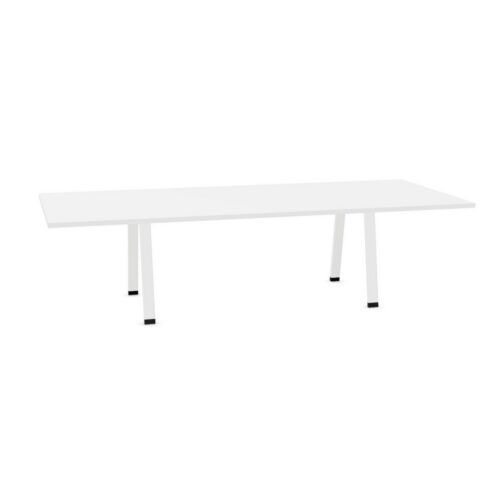


Conference Tables With Rectangular Tops and Yellow Surfaces
Decide how the yellow tabletop should appear within the room as a whole. It may provide a single color accent among neutral furniture or relate to existing artwork and other yellow details. Look at the view from the entrance as well as from the chairs. The rectangular outline creates a directional form, so the tabletop's placement and color will be read together. Establish the meeting layout first, then check whether the color relationships still make sense from the positions people actually occupy during discussion, reading and presentations.
Coordinate Yellow With Permanent Room Features
Flooring, wall finishes and fixed storage provide useful reference points when comparing yellow rectangular conference tables. Hold those elements constant while considering the tabletop color. A yellow surface beside a yellow wall may appear different from what either color name suggests. Decide if you want related tones or a clear distinction. Avoid relying on claims that a color will produce a particular mood or working result. The practical question is whether the combination fits the intended visual character of the meeting space and remains coherent with furniture already present.
Organize Opposing Sides for Shared Reviews
For meetings built around papers or plans, a rectangular top gives you a straightforward way to distinguish personal work areas from shared reference material. Consider who introduces each document and where others need to look. Yellow rectangular meeting tables still require an agreed working arrangement, particularly when devices and printed pages are used together. Decide where unused materials go so they do not accumulate between participants. If the meeting moves to a screen, review the seating direction in advance. The rectangular outline can organize the activity, but it does not resolve every change of focus.
