



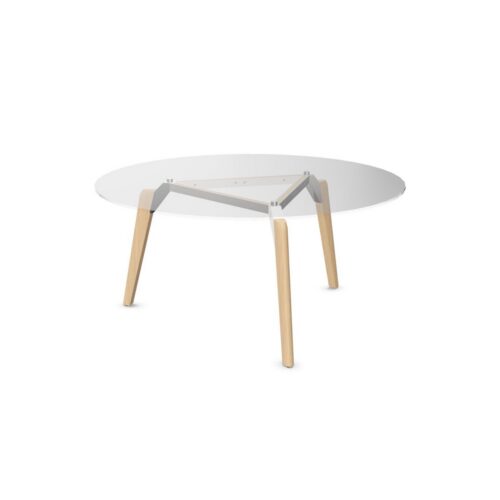


Assessing conference tables with round tops and transparent surfaces
Start by looking through the proposed surface from a seated viewpoint. Consider how the floor, chairs and supporting structure contribute to the view. A patterned floor or contrasting chair arrangement may become part of the visual composition in a way that differs from an opaque tabletop.
Keep the assessment specific to what you can observe. Transparent describes the selected appearance but does not confirm glass, clarity, tint or reflective behavior. If these characteristics affect the meeting room, examine them separately. The circular shape and transparency provide a starting point for planning, without establishing the surface's construction or performance.
Include the Floor in the Room Palette
With a transparent top, the floor deserves consideration alongside walls and upholstery. View the complete arrangement under the lighting normally used for meetings. Check whether patterns, color changes or objects beneath the table draw attention away from the work on the surface.
Transparent round meeting tables also make the arrangement of chairs visually relevant beyond their position around the edge. Consider how chair colors relate to the floor and surrounding furnishings. The aim is a coherent view, not a requirement to conceal everything beneath the top. Decide which visible elements contribute usefully to the room's appearance.
Test Documents Within the Full Visual Setting
Place familiar meeting materials on the surface during your assessment. Printed sheets, laptops and folders each cover part of the transparent area and change the overall view. Consider whether the background beneath the top remains noticeable during tasks that require sustained attention to documents.
For transparent round conference tables used in presentations, assess both the screen view and the tabletop under normal lighting. Reflections and visibility should be observed directly rather than inferred from transparency alone. Arrange seats around the curve according to discussion and display needs, leaving part of the perimeter open when useful for access.
