

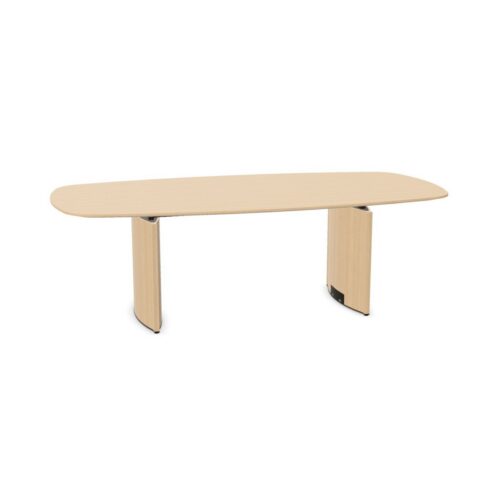
Gold Conference Tables With Rounded Sides

Conference tables with tops rounded on both sides and gold surfaces combine a distinctive color with a curved tabletop outline. Gold identifies the selected surface color; it does not establish a metallic material, reflective finish, or particular shade. Review the color alongside the room’s existing finishes, then consider how the actual rounded sides relate to chairs, access routes, and the direction of meetings.

For rooms that host visitors as well as internal teams, the combination should be assessed through everyday use. Consider what people see on arrival, where they naturally approach the table, and how they find a suitable seat. The surface color can have a clear role in the interior without being repeated throughout the room. Practical seating and presentation arrangements give that visual choice a useful context, connecting the table with the conversations and shared work that take place around it.

8 models
From €30.83 p/m
30 models
From €16.42 p/m
19 models
From €12.96 p/m
6 models
From €4.31 p/m
6 models
From €89.65 p/m
6 models
From €34.81 p/m

Relating Gold to Existing Finishes

Gold-colored elements elsewhere in the room can provide a reference, but matching them should not be assumed from the color name alone. Compare the tabletop with nearby furnishings and visible details in the conditions used for meetings. Decide whether the surface should relate closely to those elements or remain a distinct part of the palette. Keep material and finish assumptions separate from color coordination. A gold surface does not confirm metal construction or a shiny appearance. Consider the relationship from the main seated positions, where participants will see the tabletop alongside chairs, walls, and any presentation area throughout a session.

Welcoming Visitors Around the Curved Outline

Think through the arrival sequence from the doorway to a seat. Visitors should be able to understand the intended approach without moving around presentation equipment or passing through an occupied working position. Use the complete tabletop outline to establish where chairs belong, rather than interpreting rounded sides as a full description of every edge. Where a host regularly leads the meeting, consider that person's position alongside the needs of other participants. A visually coordinated table arrangement should still leave a clear relationship between the entrance, seating, and shared information. Include the route out of the room in the same review.

Positioning Conference Tables With Tops Rounded on Both Sides and Gold Surfaces

Choose the table's orientation according to the room's meeting format. Presentation-led sessions call for a review of screen views, while discussion-led meetings place greater emphasis on how participants face one another and share materials. Gold conference tables with both sides rounded should be considered within that practical arrangement. The curved perimeter may influence chair placement, but it does not determine the appropriate layout by itself. Check access to nearby storage and the space behind occupied chairs. Treat the surface color as part of the room composition while using the actual tabletop form to resolve seating and movement.

Keeping Meeting Materials Visually Organized

Consider how the room looks when the table is being used, including documents, personal items, and shared presentation materials. A gold surface should be assessed in that ordinary working context, as well as when it is clear. Decide where regularly used items belong between meetings so that the intended chair positions remain available. With gold conference tables rounded on both sides, avoid allowing decorative objects to dictate where people can sit along the curves. If an object is part of the room's visual scheme, review its placement against sightlines and access. The practical arrangement should remain understandable to returning teams and occasional visitors.

Frequently Asked Questions

Does a gold surface have a metallic finish?

That cannot be established from the color alone. Gold describes the selected surface color. Material, reflectivity, and finish require separate confirmation and should not be inferred when coordinating the meeting room.

Should other gold details match the tabletop?

They may coordinate without matching exactly. Compare them together and decide which relationship suits the room. Gold conference tables with tops rounded on both sides can also provide the only gold-colored element in the setting.

Where should visitors sit during presentations?

Choose positions from the actual tabletop outline and the view toward shared information. Check their approach from the door and make sure ordinary movement through the room remains practical while other participants are seated.

Keep conference tables with tops rounded on both sides and gold surfaces in view while comparing placement, access and the surrounding interior.

Compare how conference tables with tops rounded on both sides and gold surfaces relates to chair positions and shared views in the intended room.

Explore related selections