



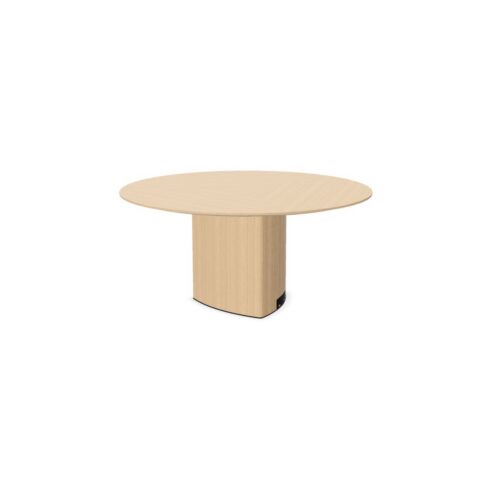
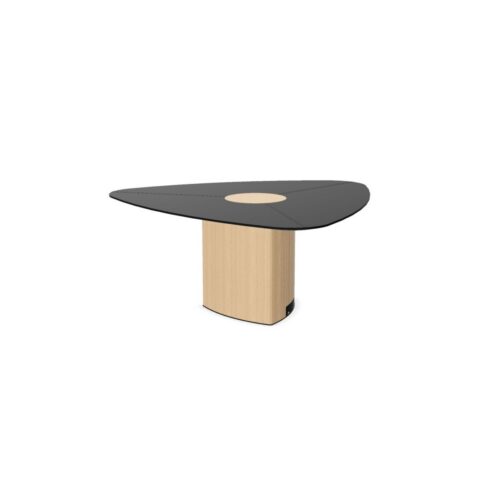


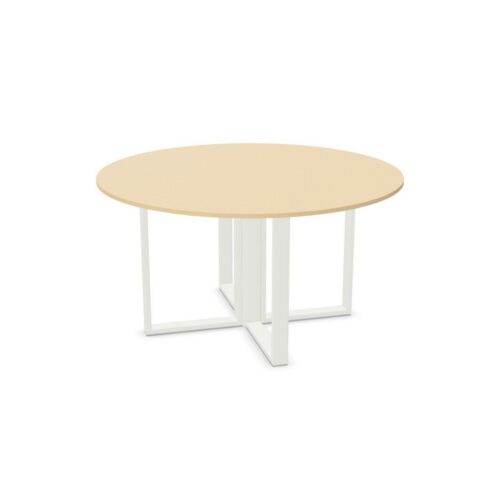
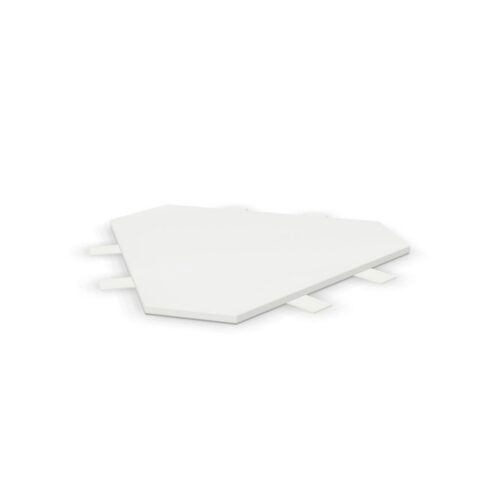


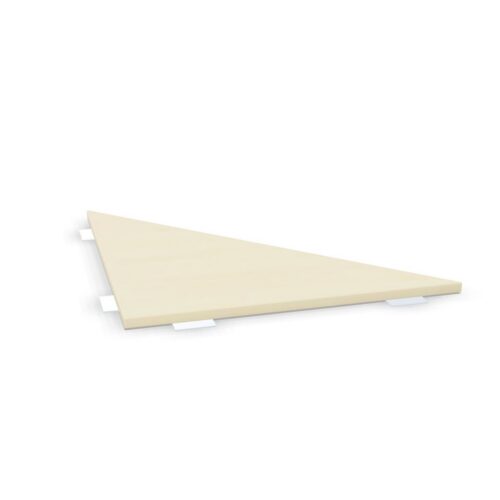


Positioning Conference Tables With Trigoon Tops and White Surfaces
Identify the activity that should determine the table's orientation. A discussion benefits from chairs directed toward the shared conversation, while a presentation also requires a comfortable view of the display. Work from the trigoon contour and review these directions from each intended chair position.
Allow the shape to inform the arrangement without assigning a fixed role to a particular place. The facilitator may need access to a writing wall, while another participant may be sharing documents. Test those movements within the proposed plan. White makes the surface part of the room's tonal composition, but the working arrangement should remain the starting point for placement.
Check Paper Visibility Against a White Background
Put the documents normally used in meetings on the tabletop before judging the color combination. White papers and a white surface may have limited visual separation, depending on their appearance and the room lighting. Assess whether participants can readily identify shared sheets and distinguish them from personal notes.
Organization can be more useful than adding further color to the room. Give shared reference materials a consistent place and keep unrelated papers together elsewhere. For meetings that move between screen work and written discussion, review the complete scene with both present. The purpose is to make working materials easy to follow without assuming any particular surface texture or finish.
