








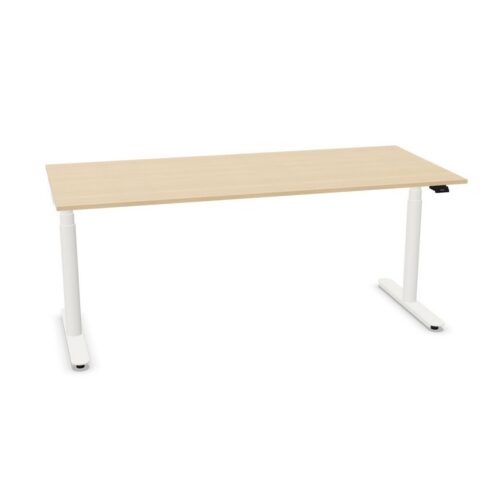







Plan a white electric desk around its setting
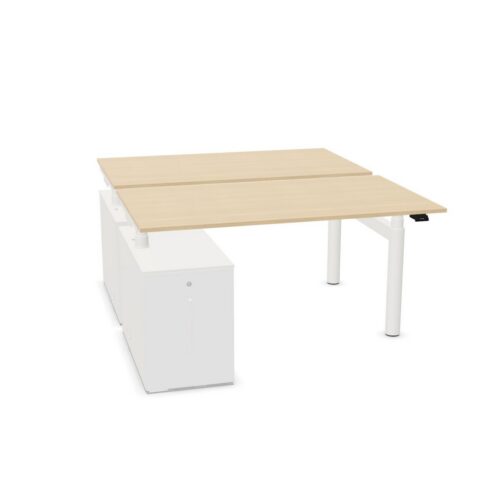
A white work surface gives a workstation a quieter visual presence than a dark top. In a bright office, it can continue the palette of walls and storage; against darker flooring or partitions, it creates a clear boundary around the work area. Consider the surrounding finishes before choosing. Matching every surface can make a room feel uniform, while a restrained contrast in the frame, chair or storage helps define each desk without competing with the overall scheme.
Think about how light reaches the workstation, too. A pale top can reflect more ambient light than a dark surface, so screen position and window direction remain practical parts of planning. The aim is a comfortable place to work, not a color effect on its own. Check the finish in relation to nearby furniture and the lighting used throughout the day, especially when several workstations share one open room.
Use electric adjustment to support daily changes
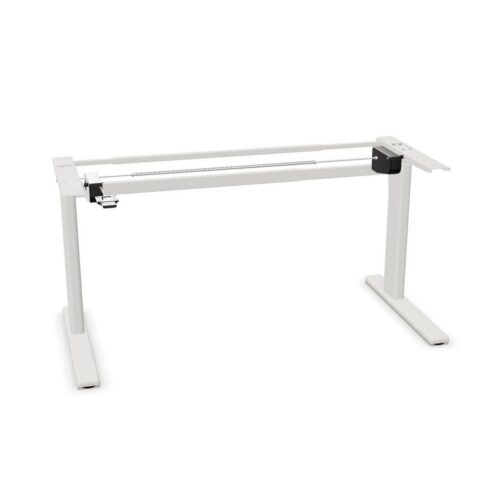
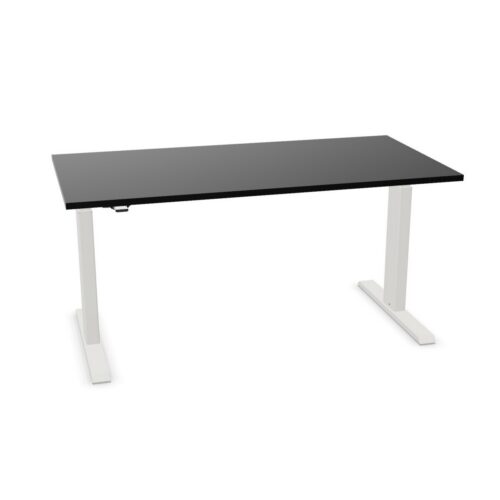
Electric height adjustment allows the user to change the desk position with powered controls. It is useful when a workstation needs to accommodate different working positions or when the user wants to alternate tasks during the day. Before selecting a model, consider who will use it and how often the setting may change. A desk for one regular user has different needs from a shared station that must be reset between colleagues.
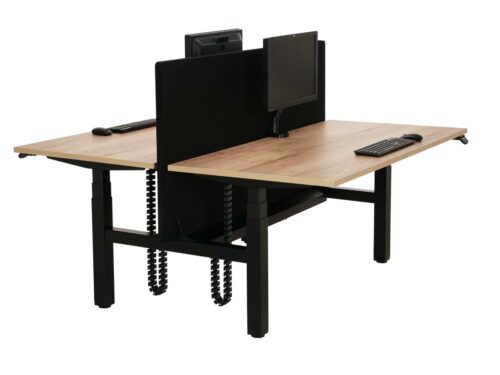
Pay attention to the whole movement area. The chair, monitor arms, screens, lighting and objects stored beneath or beside the desk should not obstruct adjustment. Cable routing also deserves a plan: power leads and device connections need enough freedom to move with the work surface without catching on the frame or pulling at equipment. Check the specific configuration rather than assuming every electric desk includes the same cable-management components.
