



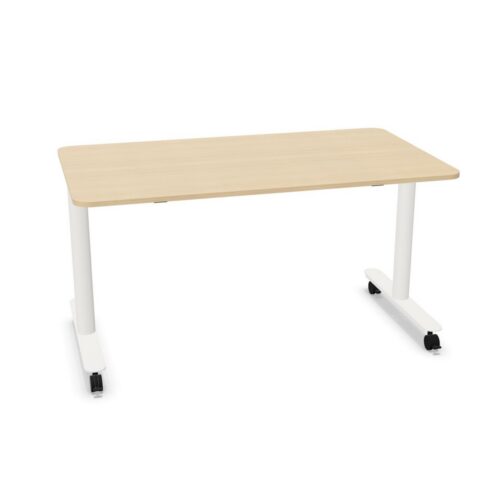


Bring a natural-looking finish into an adaptable workspace
A wood-effect surface can add warmth to an office scheme and relate to other natural tones. It can also balance the technical appearance of screens, frames and accessories. The precise finish may vary between products, so compare each description and image when the desks need to coordinate. Do not assume that a wood color label describes a particular species or material; check the product's own construction details.
Think about the wider room when choosing a finish. Flooring, storage, chairs and lighting affect how the desk appears. A related wood tone can create continuity, while a deliberate contrast helps the workstation remain distinct. In a shared area, repeating the finish can connect different desk shapes. The aim is a coherent palette that supports work, rather than an exact match across every furniture item.
Set working height around the way people use the desk
Height adjustment lets the surface change to suit different users, tasks or working positions. Consider whether the desk will belong to one person or be shared, and how its position will be adjusted through the day. Equipment should remain practical as the top moves. A clear setup helps users change position without having to reorganize screens, lighting and work materials each time.
Adjustment mechanisms vary across models, so review the exact product details. Check the movement area and make sure chairs, storage and nearby furniture will not obstruct the desk. Plan cable routes with enough flexibility to move without snagging or tension. If monitor arms or other accessories are needed, confirm their compatibility with the selected frame and consider how they will behave as the worktop changes position.
