

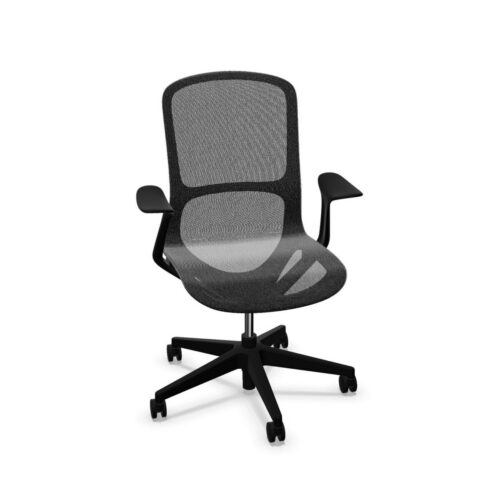
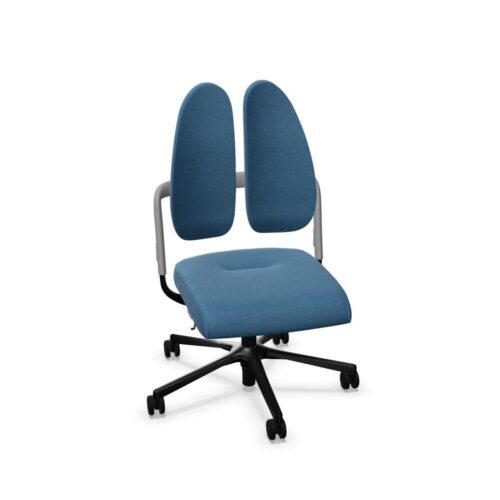
4D Armrest Office Chairs Without Backrest-Height Adjustment

4D armrest office chairs without backrest-height adjustment combine movable arm supports with a backrest that cannot be raised or lowered through a height control. That distinction guides the assessment: the existing backrest position needs to suit the user, while the arms offer movements that must be explored separately. An office manager should avoid treating one adjustable area as a substitute for another. The employee needs to assess backrest contact and working arm positions within the same complete workstation arrangement.

Begin by observing how the person uses the backrest before changing the arms. Ask where contact occurs and whether they remain against it during ordinary desk activities. Office chairs with fixed back height can still differ in shape and dimensions, so those details need direct assessment. Next, investigate the actual movements of the 4D armrests and their relationship with the desk. The final check is combined: can the user keep an acceptable backrest position while their hands reach the work?

3 models
Price on request
2 models
From €19.64 p/m
7 models
From €2.97 p/m
10 models
From €7.46 p/m
2 models
From €45.80 p/m
18 models
From €15.83 p/m
5 models
From €2.21 p/m
19 models
From €12.34 p/m
42 models
From €13.98 p/m
12 models
From €17.30 p/m
22 models
From €20.38 p/m
29 models
From €7.71 p/m
Price on request
4 models
From €5.86 p/m
4 models
From €13.45 p/m
2 models
From €6.72 p/m
4 models
From €16.73 p/m
15 models
From €8.36 p/m
6 models
From €7.38 p/m
28 models
From €11.77 p/m
11 models
From €11.77 p/m

Assess Existing Backrest Contact Before Adjustment

The backrest's vertical position is an existing condition of this combination. With 4D armrest office chairs without backrest-height adjustment, ask the user to sit normally and describe where the backrest meets their back. Observe that contact during typing, reading and transitions between tasks. Do not ask the person to search for a back-height control that is absent. Instead, establish whether the existing position and shape work for them. Record any concern before changing the arms, so an improvement in forearm support does not distract from a backrest relationship that still requires consideration at the workstation.

Explore Arm Movement As A Separate Function

The 4D armrests provide another area to assess, but their specific directions, ranges and controls require checking. Have the employee place their hands at frequently used equipment and try the available settings. Observe the relationship between elbows, forearms and the support surfaces without assuming that every armrest can reach the same positions. When comparing office chairs, record which movements prove useful for the task. Keep the chosen seated position under review throughout the trial. A useful arm setting should work alongside the existing backrest contact rather than requiring the user to abandon it to reach the desk.

Use The Desk To Test Both Contact Areas

Bring the assessment to the intended work surface once the user understands the armrest controls. 4D armrest office chairs without backrest-height adjustment need a combined check of desk approach, forearm position and continued backrest use. Watch for an armrest meeting the desk edge or underside. Explore available arm positions if that occurs, then repeat the task and ask about the result. Changing the arms cannot raise or lower the backrest. Keep that limit explicit when considering possible settings, and judge the final position through the employee's ordinary work rather than an isolated adjustment demonstration alone.

Separate Back Height From Other Chair Functions

The absence of back-height adjustment answers one specific question about the backrest. It does not establish whether other backrest movements or seat adjustments are present. Office chairs should be inspected for any additional functions relevant to the role, with their effects assessed separately. Keep a concise record distinguishing the fixed back height from the available armrest movements and any independently confirmed controls. For reassignment, repeat the backrest-contact trial with the incoming employee before transferring settings. Different proportions can change the relationship with the same support surface, even where the desk and task arrangement remain unchanged.

Questions About Fixed Back Height

Can armrest settings change the backrest height?

No back-height adjustment is available in this combination. For 4D armrest office chairs without backrest-height adjustment, assess the backrest's existing vertical position directly. Armrest settings address a different contact area and should not be treated as a replacement.

Does fixed back height mean no backrest movement?

That is not established. Height adjustment and other possible backrest movements are separate characteristics. Inspect any functions needed for the task independently, and avoid extending the absence of a height control into a claim about the whole backrest.

What if the arms fit but the backrest does not?

Keep both findings visible in the assessment. Suitable arm support does not settle a concern about backrest contact. Review another seating arrangement if the existing back height cannot provide an acceptable result for the intended user during normal desk work.

Explore related selections