



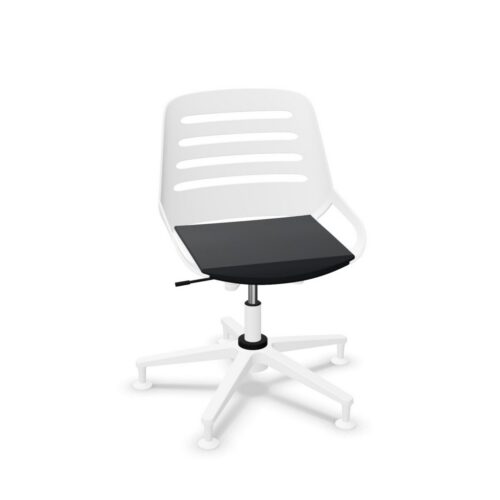
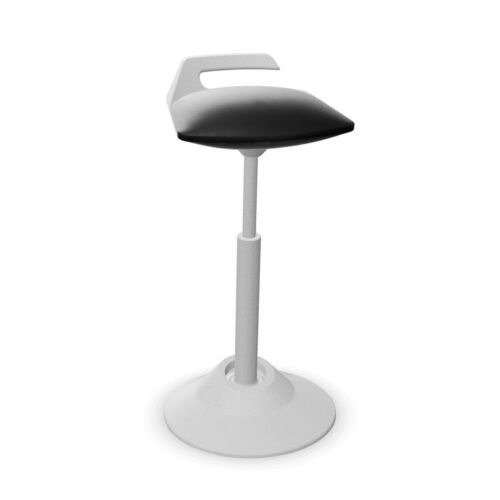


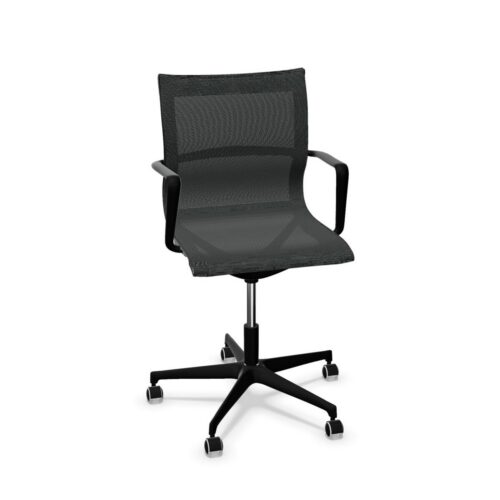


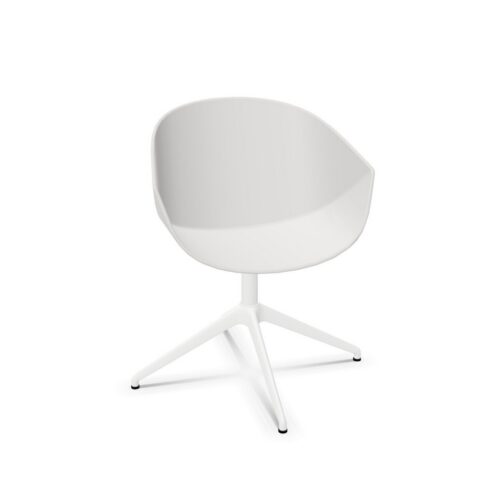



Read the Arrangement From Floor Level
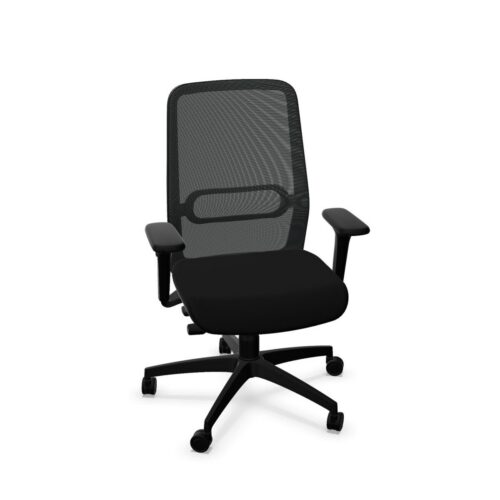
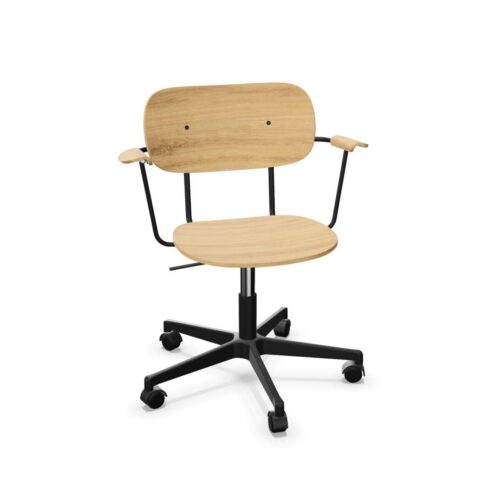
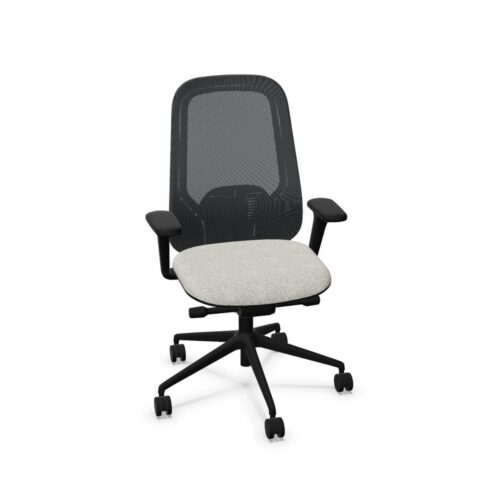
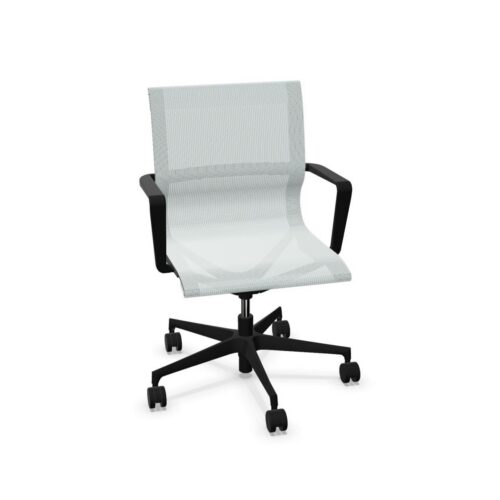
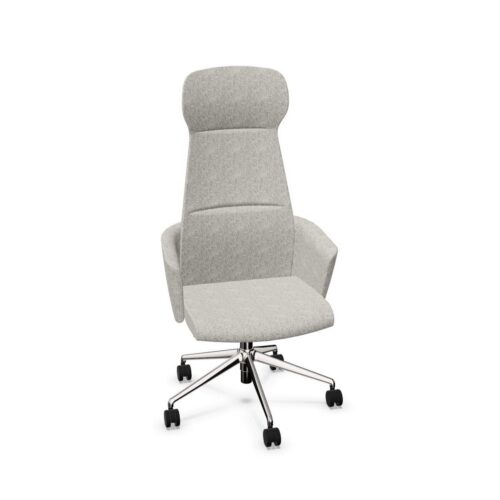
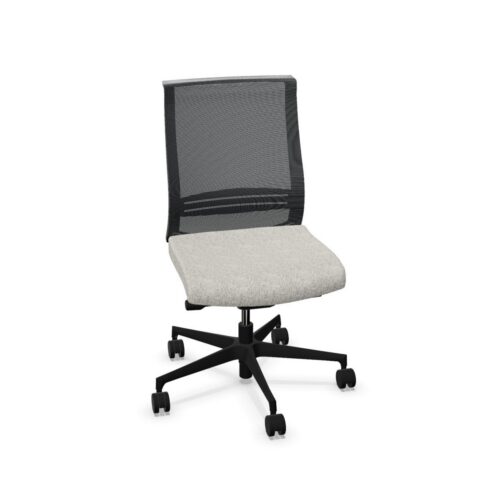
Assess the black base beside the desk supports and floor rather than viewing the chair against a blank background. Include neighbouring chairs if the workstations sit close together. Decide which elements should share a colour relationship and where variation is acceptable. This gives the base a defined role within the furniture arrangement without requiring every visible component to match exactly.
Look from the entrance, the main walkway and the seated position. A base that is partly hidden beneath a desk may become more visible when the chair is pulled away. Include both conditions in the review. Where black appears elsewhere in the room, compare the actual surfaces, since the same colour description does not establish identical tone, texture or sheen.
Confirm the Base's Physical Requirements
Obtain the base dimensions and construction details relevant to the workstation. Black tells you nothing about the space the base occupies or its material. Compare the confirmed footprint with desk supports, nearby furniture and the routes users take when entering or leaving the workstation. Where other components project beyond the base, include them in the overall space assessment.
Examine the complete chair in its normal working position and during typical movement. If it has castors or other moving components, confirm their suitability for the intended floor through the relevant information and a practical assessment. If the base has a different arrangement, evaluate that arrangement directly. Avoid assuming a particular base form or movement capability from its black colour.
