



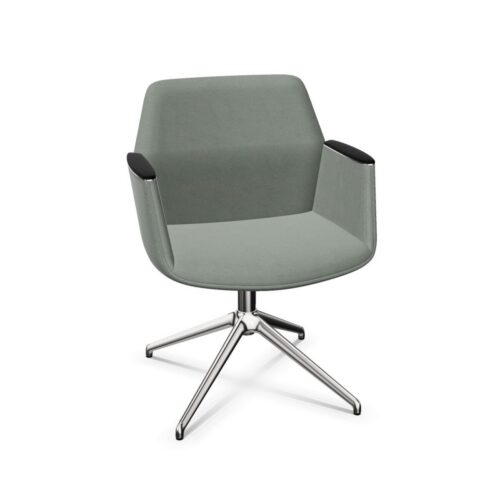
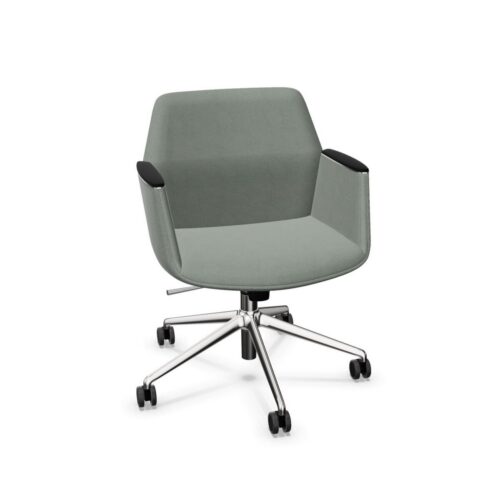

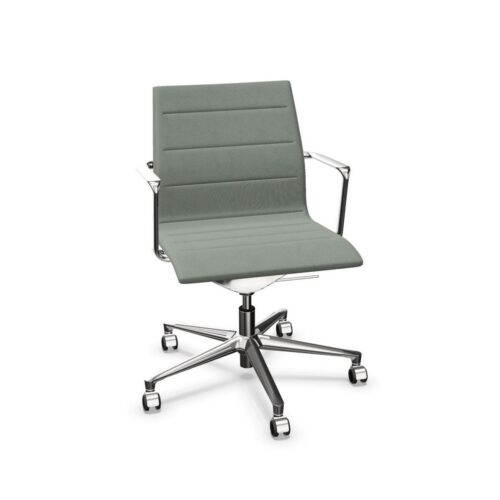
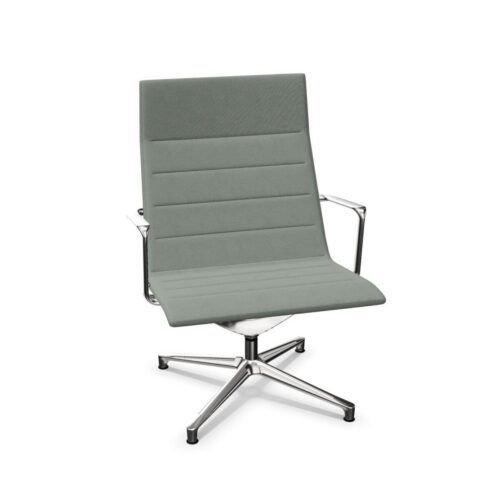







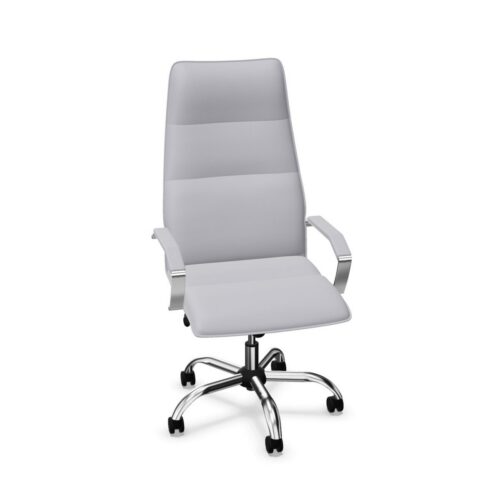


Let the room's activity shape the trial
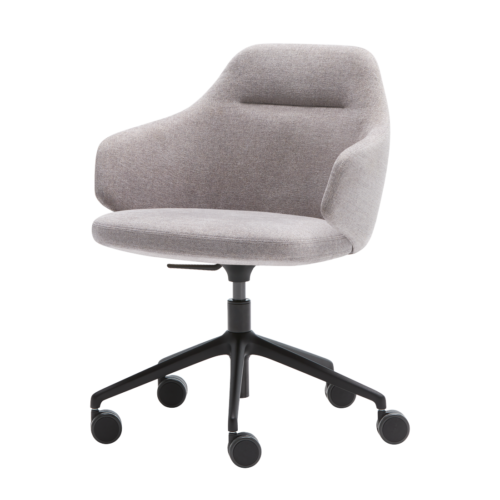
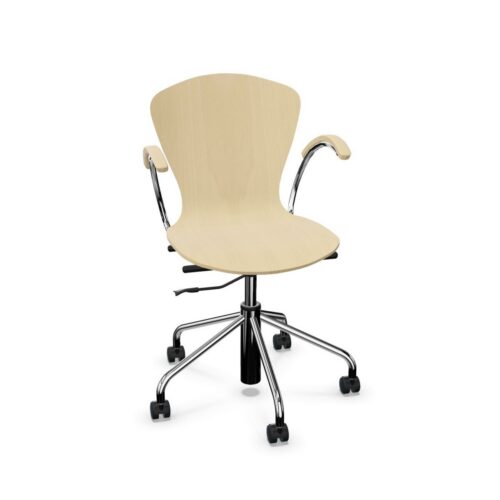
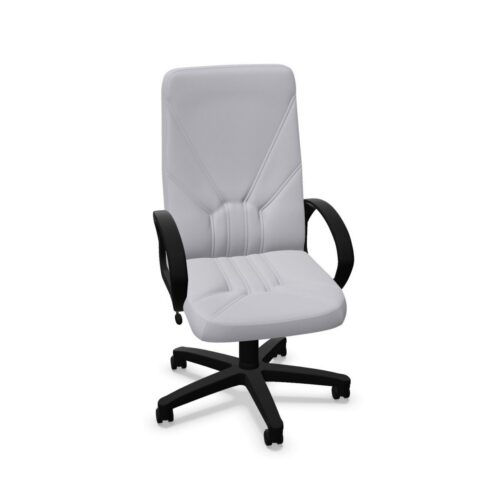
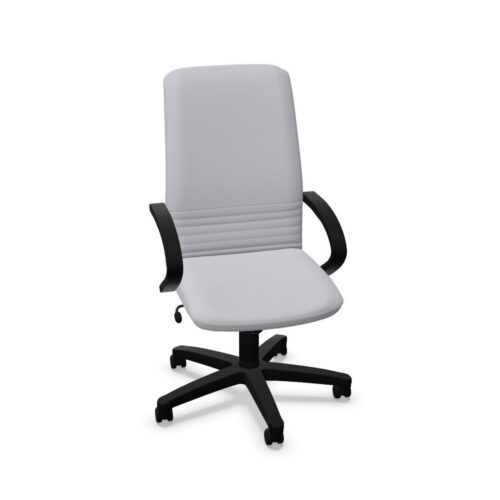
For steel base office chairs with fixed-height backrests, use a trial that reflects the actual room. Around a meeting table, ask participants to view the screen, write notes and speak to someone seated beside them. At a workstation, include keyboard use and access to frequently handled materials. Observe when people use the backrest and when they move away from it. Ask whether returning against it provides suitable contact. These observations help establish the significance of its fixed height within the real activity, rather than judging the seating only in a static posture away from the furniture.
Review steel construction alongside the footprint
The steel base should be assessed as a physical assembly within the layout. Confirm its dimensions and look for conflicts with table supports, desk legs or the places users put their feet. Where seating must be repositioned, establish the actual handling requirements and any fitted movement components. Steel alone does not establish the chair's total weight or a particular load rating. For office chairs in busy rooms, also examine the route people take when arriving and leaving. The relevant question is how the complete base works in that space, with the furniture and floor already in place.
