

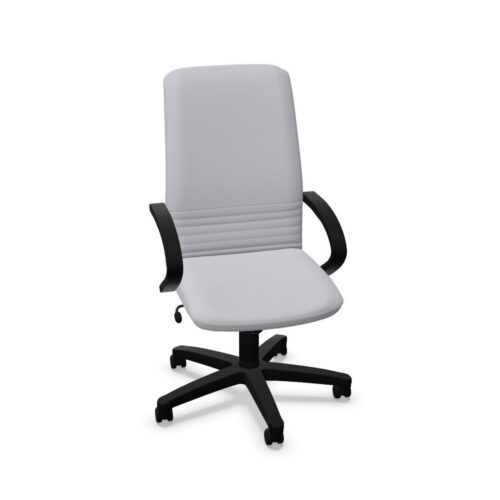
Steel Bases In Office Seating

Specifying a steel base gives the office seating brief a defined material reference, but it does not settle the chair’s performance. Construction, dimensions, connections and floor contact components still need to be reviewed. For facilities teams, the priority is to connect each requirement to the right evidence: a stated load limit for permitted use, suitable guidance for maintenance and a practical assessment for the intended workstation. Steel should be part of that description without becoming a substitute for those separate checks.

Begin with the activities the chair must accommodate, including normal desk work and any movement between nearby areas. Check the base footprint, space for feet and approach to the desk. Then establish the surface finish and how it should be maintained. This order keeps the review grounded in use. It also supports a clearer comparison between steel base chairs whose geometry, visible treatment and overall seating configuration may differ, despite sharing the same base material.

7 models
From €22.59 p/m
3 models
From €22.88 p/m
4 models
From €44.34 p/m
11 models
From €33.56 p/m
3 models
From €39.44 p/m
14 models
From €2.77 p/m
4 models
From €15.64 p/m
4 models
From €1.97 p/m
6 models
From €2.89 p/m
2 models
From €4.28 p/m
4 models
From €4.02 p/m
4 models
From €13.45 p/m
2 models
From €5.45 p/m
2 models
From €4.61 p/m
3 models
From €5.56 p/m

Write Requirements Around The Working Environment

Set out where the chair will be used, who will use it and which tasks the workstation supports. Include any requirements concerning permitted load, shared use or a particular seating standard. These statements provide a basis for reviewing evidence. A steel base is a material characteristic; the intended duty needs to be established for the chair as a complete assembly.

Ask for information that applies to the actual configuration being considered. Check that the described base, connections and other relevant components correspond with the chair assessed. Avoid treating visible solidity as proof of a rating. If a requirement is important enough to include in the brief, it should have a clear source of confirmation before the specification is finalised.

Review The Base Shape In Context

Assess the base footprint alongside the desk supports and nearby furniture. Check clearance while the chair is used at the desk and when a person approaches or leaves it. Where several workstations sit close together, review the relationship between neighbouring chairs too. The base's shape and dimensions matter to this exercise independently of its steel construction.

Invite representative users to check foot placement around the base. Include any footrest and the actual location of nearby equipment. Then identify the components that contact the floor and confirm their suitability for the surface. Steel does not establish a particular castor or glide arrangement, so the complete configuration needs to be considered during the assessment.

Make Surface Treatment A Separate Decision

Confirm the base finish, including its colour and any relevant surface treatment. Compare a representative example with surrounding furniture if visual coordination matters. The description steel does not establish an exposed metallic appearance or a particular coating. Record the selected finish clearly so that its visual requirements can be checked independently from the base material.

Request care guidance for that finish and review it against the workplace's cleaning routine. Obtain specific confirmation if particular products or environmental conditions form part of normal use. Do not infer resistance to moisture, chemicals or surface damage from steel alone. Maintenance instructions need to address the actual base and finish rather than the material category in general.

Plan Handling And Routine Checks

If seating will be repositioned during cleaning or room changes, establish the complete chair weight and appropriate handling method. Consider the available routes, furniture spacing and any changes in floor surface. The base material does not provide enough information to judge the handling task. Assess the chair in the form staff will actually need to move.

Agree an inspection and reporting process using the chair's guidance. Include the base, central connection and floor contact components in the relevant checks. Establish who can assess a reported concern and ask separately about permitted repairs or component replacement. A steel construction does not by itself establish that a particular part can be repaired or that a specific maintenance procedure is appropriate.

Steel Base Specification Questions

Does steel prove a higher load capacity?

No load capacity is established by the base material alone. Request the stated limit and any relevant supporting evidence for the complete chair configuration. Construction details and connections need to be considered alongside the material when reviewing the intended use.

Should cleaning requirements be checked separately?

Yes. Confirm the surface finish and obtain instructions for the actual base. If the workplace uses particular cleaning products, check their compatibility explicitly. A steel description cannot establish which chemicals or cleaning methods are permitted on the finished component.

How can an office manager compare alternatives fairly?

Use the same requirements for each chair: intended duty, supporting evidence, base clearance, floor compatibility, finish care and handling arrangements. Add a practical assessment of user fit. This makes the shared steel material one clear detail within a complete comparison.

Explore related selections