

Plastic Base Office Chairs With Fixed-Height Backrests

Plastic base office chairs with fixed-height backrests call for a comparison centred on the seated person. The base uses plastic, and the backrest has no vertical height adjustment. These facts describe different parts of the seating, but they meet in the practical assessment: the chair must fit the workstation while the backrest meets the user at a suitable height. An office manager should establish both relationships before treating a consistent appearance as a reason to use the same seating throughout a room.

A useful trial starts with ordinary activity rather than a list of assumed features. Let colleagues approach the desk, sit back, reach the keyboard and move away again. Observe how the base occupies floor space and where the backrest contacts each person’s back. Other adjustments may change the overall experience, but their availability needs checking separately. With these office chairs, a fixed backrest height makes direct assessment particularly relevant whenever users have different body proportions or different working habits.

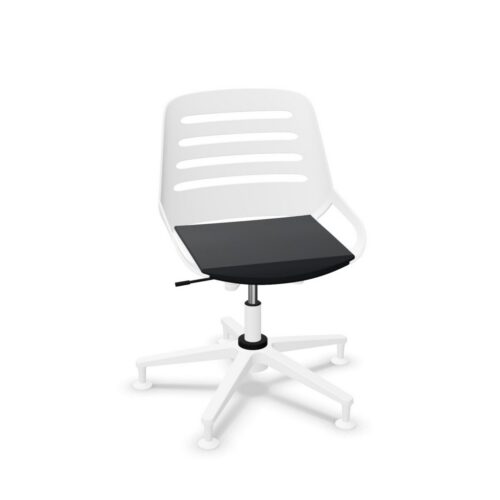
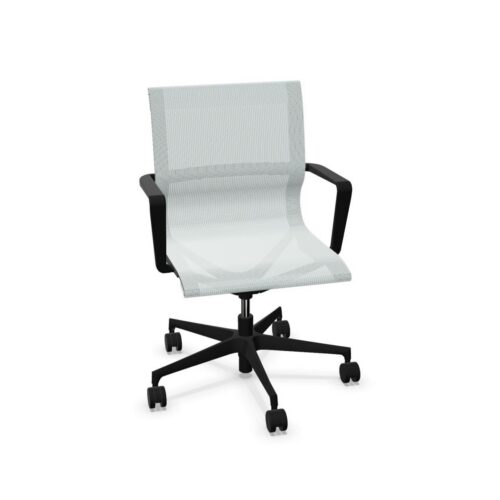
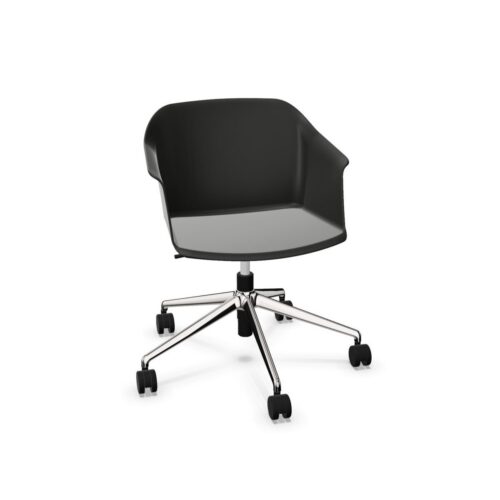
2 models
From €10.32 p/m
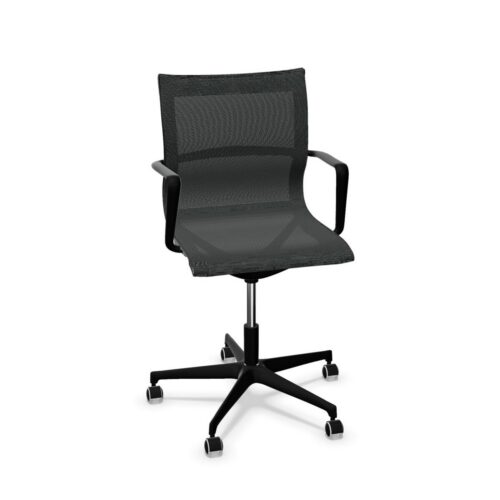
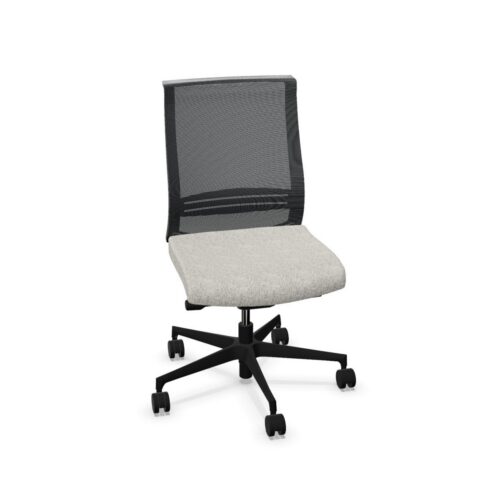
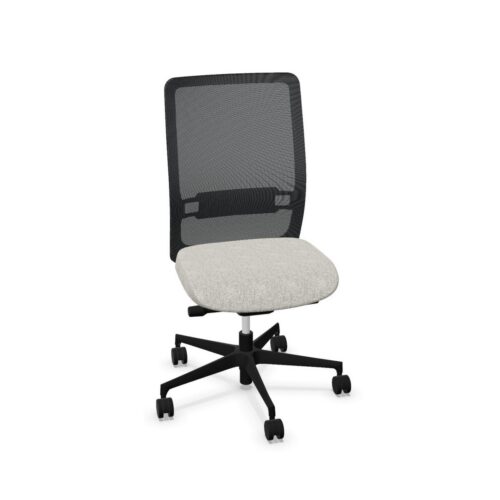
3 models
From €10.49 p/m
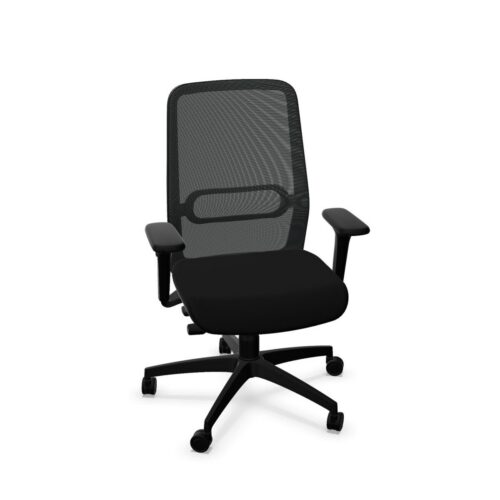
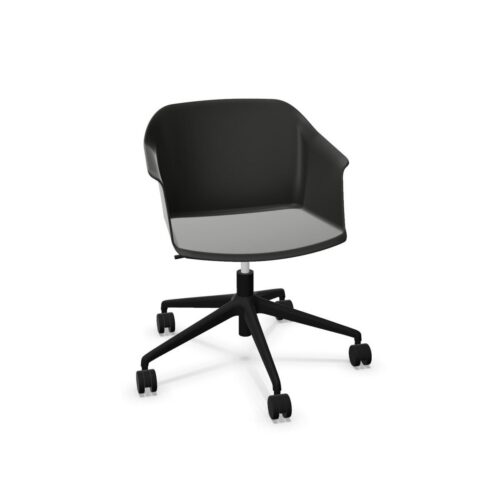
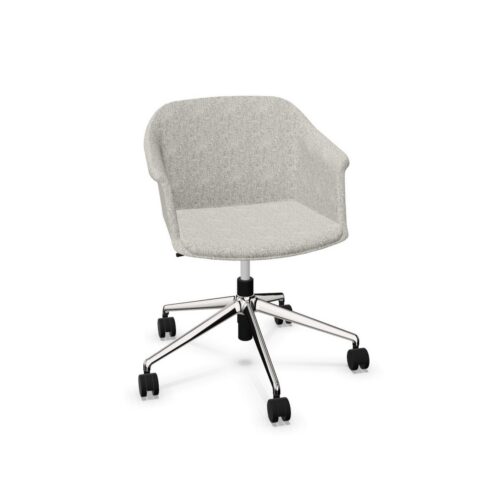
3 models
From €10.17 p/m
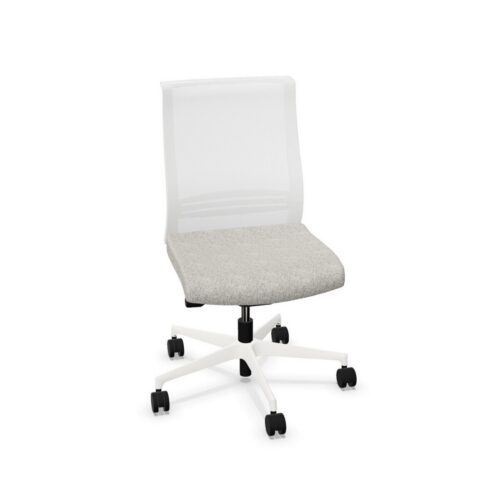
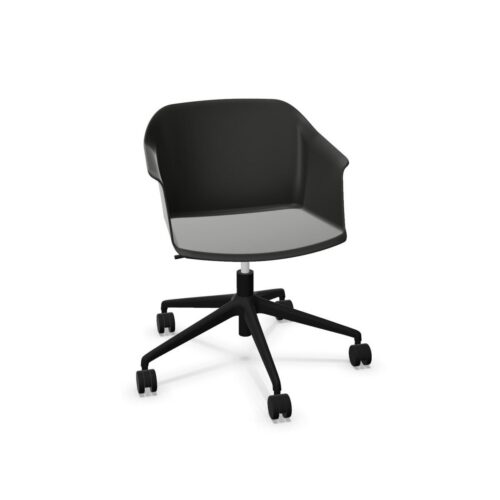
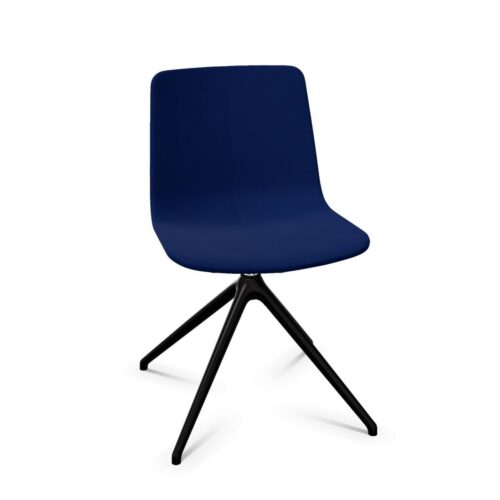
2 models
From €6.13 p/m
2 models
From €9.18 p/m
10 models
From €10.37 p/m
9 models
From €10.37 p/m

Use a consistent seated trial

Compare plastic base office chairs with fixed-height backrests using the same task sequence for each participant. Begin with the person seated naturally, then ask them to work with the equipment they normally use. Record whether they can remain against the backrest while reaching the keyboard and viewing the screen. Ask where contact feels useful and where it feels misplaced. Repeat the observation after the person has moved away and returned to the desk. This gives an office manager a clearer basis for comparison than a brief impression formed while sitting still in a demonstration area.

Check how the base occupies floor space

The plastic base is part of the chair's construction, but its material does not tell you its footprint. Establish the actual dimensions and examine the space around desk legs, floor boxes and nearby furniture. Check how users approach the seat without catching their feet against the base. If movement is part of the intended use, assess the fitted floor contact components on the relevant surface. Office chairs should be evaluated in the layout they will occupy, including the space used when people stand, turn towards a colleague or leave the workstation during an ordinary working day.

Separate fixed height from fixed movement

Choosing plastic base office chairs with fixed-height backrests establishes that the backrest cannot be raised or lowered. It does not establish whether the chair has a reclining mechanism, an adjustable seat or armrests. Check each feature against the work being performed. Where seat height adjustment is available, use it to assess the person's relationship with the desk and floor; do not assume it will correct the position of the backrest relative to the torso. This distinction helps managers describe an actual fitting problem clearly instead of requesting an unrelated adjustment that cannot address the concern.

Decide where a common specification works

A consistent seating brief can simplify comparisons, but plastic base office chairs with fixed-height backrests still need to be assessed for the intended users. Divide feedback into observations about the base, the seated position and access to work. Look for recurring issues rather than relying only on average impressions. A backrest position accepted by most participants may remain unsuitable for a particular colleague. Keep an exception process available and document the reason for a different seating choice. That approach preserves clear assessment criteria while recognising the practical limits of a backrest that stays at one height.

Answers for planning fixed-backrest plastic base seating

Can seat adjustment replace backrest height adjustment?

Seat adjustment serves a different purpose. It changes the person's relationship with the floor and workstation, depending on the feature provided. The backrest still has no separate vertical adjustment, so check its contact with the user after setting the seat.

Does a plastic base mean the chair is lightweight?

No particular total weight follows from the base material alone. The complete assembly includes other components. If staff need to reposition seating, confirm the actual weight and assess the required movement rather than judging it from the appearance of the base.

Who should take part in the assessment?

Include intended users with different seated proportions and representative tasks. Facilities staff can assess floor space and movement, while each user reports back contact. Combining these observations gives office chairs a more meaningful assessment than appearance alone can provide.

Explore related selections