





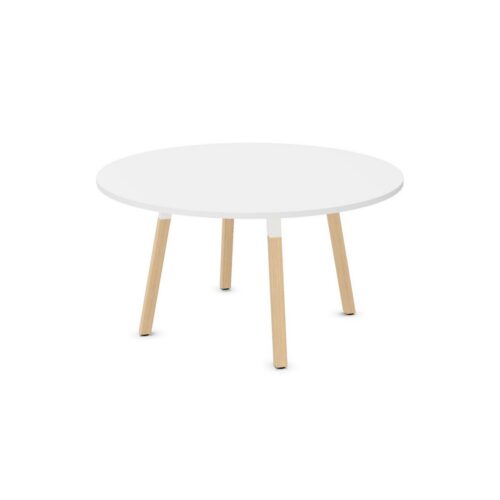
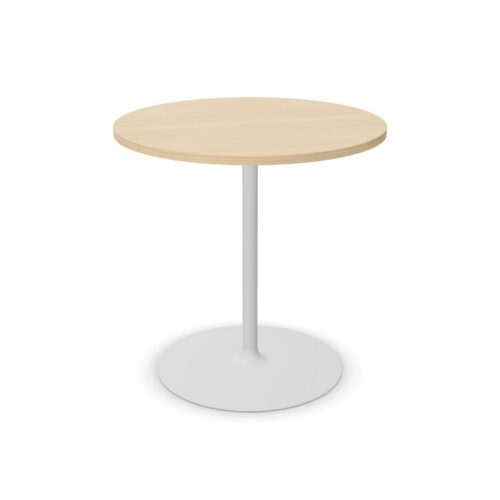
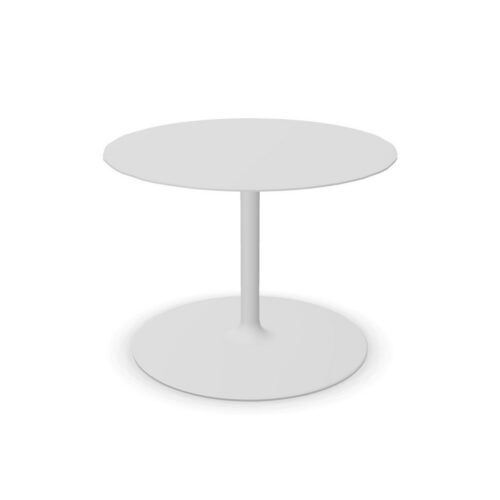


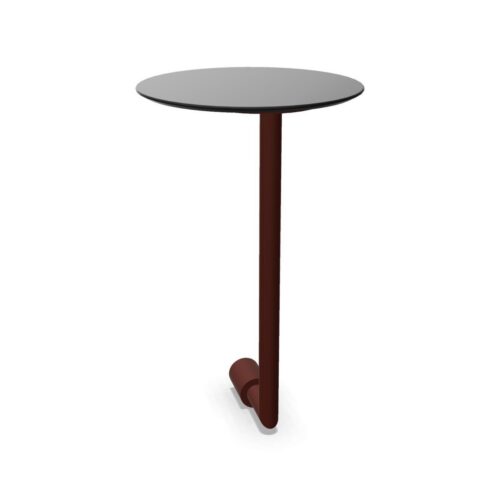


Centering lounge furniture with round tops and grey surfaces
Begin by identifying the center of the seating group rather than the center of the room. These positions may differ, particularly where a lounge occupies part of a larger open area. The table's location should be assessed through its relationship with the intended seats and the boundary of that particular group.
A round outline can be reviewed from every direction without choosing a leading edge. Position still matters, however. Compare how the perimeter relates to each seat, and note whether one side of the group is left visually detached. Use the occupied seating positions as the main reference during this review.
Keep a clear route around the group
When planning lounge furniture with round tops and grey surfaces, distinguish the space around the table from the route past the lounge. A circular perimeter does not by itself establish an adequate walking route. Mark where people enter the group and where others continue through the wider room.
Review the approach to each seat that is expected to be used. In an uneven arrangement, some approaches may be more direct than others. Consider the position of the neighboring furniture and test alternatives while keeping the intended circulation visible. The aim is a clear relationship between seating and movement.
