

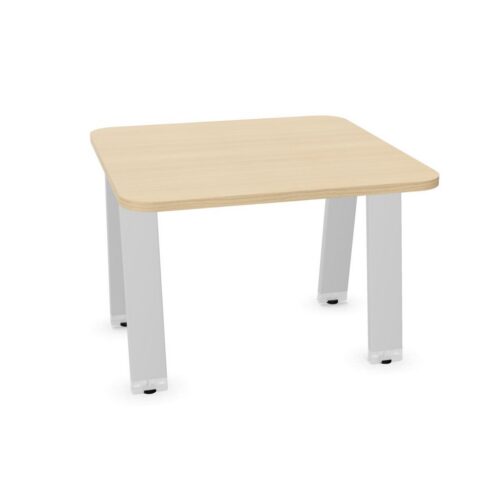
Lounge Furniture With Square Tops and White Bases

Lounge furniture with square tops and white bases brings an equal-sided tabletop outline together with a pale supporting element. This combination is useful to assess for lounge settings where straight seating lines or clearly defined furniture groups guide the plan. The square can establish a deliberate relationship with a sofa front, while the white base connects visually with its immediate background. Placement should account for the corners as well as the edges.

When reviewing lounge furniture with square tops and white bases, decide how closely the table should follow the room’s geometry. A clear alignment may suit an organized reception area, but the approaches to individual seats still need attention. Check the supporting footprint separately and consider the effect of white against the floor. The most useful comparison treats the square outline, pale base, and surrounding seating as parts of the same arrangement rather than independent style choices.

2 models
From €19.09 p/m
12 models
From €31.57 p/m
2 models
From €36.94 p/m
9 models
From €14.47 p/m
€13.37 p/m
2 models
From €22.71 p/m
4 models
From €23.04 p/m
€6.38 p/m
2 models
From €41.76 p/m
2 models
From €27.04 p/m
3 models
From €9.37 p/m
2 models
From €7.03 p/m
12 models
From €9.73 p/m
6 models
From €9.94 p/m
29 models
From €6.19 p/m
€3.94 p/m
2 models
From €124.26 p/m

Coordinating lounge furniture with square tops and white bases

Select the line that should organize the table within the seating group. A sofa front may provide the clearest reference, or the room may have a defined lounge boundary that matters more. Align the square deliberately with that reference, then review how the remaining edges relate to nearby seats. When the room contains competing directions, choose a primary relationship instead of trying to satisfy every line. Assess the white base within the same arrangement. Its outline may differ from the tabletop, so the visual order established above should be checked against what is visible below from the main approach and adjacent seats.

Review corners through the seating sequence

Consider the sequence of approaching, turning toward, and leaving each seat. This reveals how the tabletop corners relate to ordinary movement around the group. A corner may sit neatly within a plan while occupying a less useful position beside an entry route. Compare the complete table location with the surrounding seating before deciding whether a rotation would help. Turning a square changes both its relationship with the primary alignment and the position of its corners. Review those effects together. The supporting footprint also belongs in this assessment, particularly where it occupies a different area beneath the top and is not apparent from an overhead view.

Balance white with surrounding details

For lounge furniture with square tops and white bases, establish whether the pale support should connect with the background or create a visible contrast. A dark floor can emphasize the base, while a pale floor may make its outline less pronounced. Review the actual appearance beside nearby white elements rather than assuming an exact match. The color designation does not establish a particular finish or material. Consider how much of the base is exposed when the surrounding seats are in their intended positions. This gives a more useful picture of its contribution than evaluating it separately from the rest of the lounge arrangement.

Use repetition with a clear purpose

Where square geometry appears elsewhere in a lounge, a shared alignment can connect different seating areas visually. Decide which relationships should repeat and where the room calls for a different response. Consistency does not require every table to occupy an identical position relative to every seat. The useful aim is a recognizable approach that still accounts for entrances, neighboring furniture, and individual seating groups. Review each location on its own, then step back to assess the whole room. The white bases may contribute a recurring pale detail, while the square tops provide the common outline. Keep both roles intentional when comparing the overall composition.

Frequently Asked Questions

Should every square top follow the same direction?

A common direction can establish visual continuity, but each seating group still needs its own review. Use the room's primary lines without forcing an unsuitable position at a particular approach.

What changes when a square table is rotated?

The corners move relative to seats and routes, and the edges establish a different relationship with the room. Check the base as well so that the complete piece is considered.

How can the combination remain visually coordinated?

Assess lounge furniture with square tops and white bases through consistent alignment, purposeful corner placement, and the relationship between white supports and nearby pale details. Exact matching throughout the room is unnecessary.

Explore related selections