

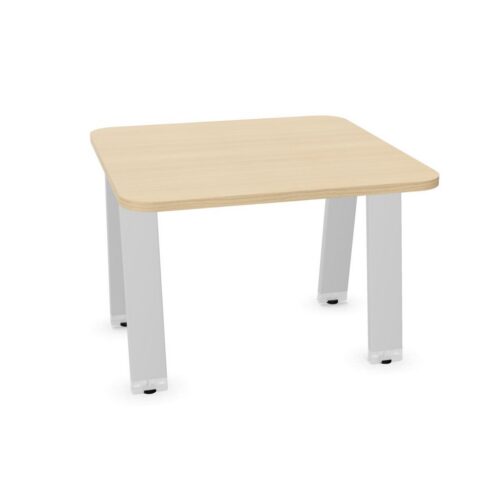

Square Coffee Tables for Shared Lounges

Square coffee tables give workplace lounge arrangements a clear center, with a tabletop outline that can relate to seating on several sides. This makes the shape relevant where colleagues gather around a shared surface or visitors wait in a defined seating group. Start with the positions of the seats and the routes through the room. The table should belong to the group without becoming an obstacle between the entrance and the next destination.

When comparing square coffee tables, consider how each side will be approached. An arrangement that looks balanced from above may work differently when people enter from one direction or use only part of the seating. Review the corners, the relationship between the tabletop and its supports, and the position of nearby furniture together. These details help establish whether the square outline suits a central meeting point, a paired seating arrangement or a quieter lounge setting.

18 models
From €27.49 p/m
6 models
From €28.06 p/m
€6.38 p/m
2 models
From €19.27 p/m
€21.83 p/m
2 models
From €41.76 p/m
2 models
From €16.83 p/m
2 models
From €7.59 p/m
2 models
From €27.04 p/m
€5.00 p/m
€4.57 p/m
3 models
From €9.37 p/m
€3.94 p/m
2 models
From €124.26 p/m

Planning Seating Around Square Coffee Tables

Begin with the conversation pattern you want the space to support. Seats facing one another create a different relationship with a square top than seats gathered around adjacent sides. Place the proposed outline on a room plan and identify who will use each edge. A centered table can look orderly, but visual symmetry should follow the seating arrangement rather than determine it. If a seat sits beyond a corner, consider whether turning that seat or shifting the table creates a clearer relationship. Review the arrangement from the entrance as well as from the seats.

Keep Corners Outside the Main Walking Route

The corners deserve particular attention when square coffee tables sit near busy circulation. Trace the route people take from the entrance to reception, onward to meeting rooms and back toward the exit. Then mark where someone might step around a seated visitor or pause to speak. Avoid relying on an empty room view to judge these movements. A corner that appears unobtrusive in isolation can occupy the natural route around a seating group. Consider the complete tabletop outline, the supports beneath it and the positions of neighboring furniture before settling on the placement.

Use Repetition With a Clear Purpose

Repeated square outlines can give separate lounge groups a consistent visual structure. That consistency works best when each group also has a clear role. A visitor waiting area may need an obvious approach from reception, while a staff lounge may be organized around informal conversation. Keep the relationship between seating and table intentional in both settings. There is no need to repeat every placement simply because the tabletop shape matches. Aligning an edge with nearby furniture can establish order; rotating the whole arrangement may better address the room. Judge the result against actual movement and use.

Compare the Whole Table, Beyond Its Outline

Square coffee tables share a top shape, but that alone does not establish how they will sit within a lounge. Examine the support arrangement, the visible balance between top and base, and the relationship to surrounding seats. Look at the table from seated viewpoints as well as standing positions. Check whether the supports occupy places where people naturally position their feet, and whether adjacent pieces compete for the same space. Assess the exact finish separately within the room palette. Shape provides a starting point for comparison; the complete furniture arrangement determines the most appropriate choice.

Frequently Asked Questions

Should the table always sit at the center?

No. Position it in relation to the seats that will use it. A centered placement may suit an evenly arranged group, while an offset position can better reflect seating concentrated on particular sides.

Can this shape work beside a sofa?

Yes, provided the relationship is considered carefully. Check the approach to the sofa, the position of the table corners and whether the surface sits naturally within the intended seating arrangement.

What should a project team compare first?

Compare square coffee tables against a seating plan first. Establish which seats need a relationship with the surface, then review walking routes and the position of the table supports.

Explore related selections