


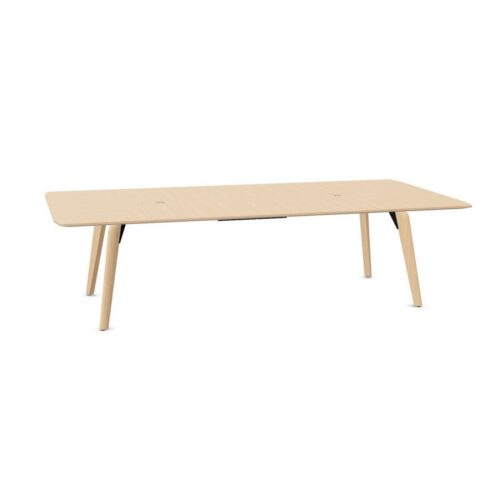


Consider the view through the tabletop
A transparent surface makes the area beneath it relevant to the room's appearance. Review the floor, chair positions and the places where participants may put bags or other belongings. These elements should be considered as part of the meeting arrangement rather than left until the end. Look from seated positions and from the entrance, since each gives a different view of the space. Transparency does not guarantee a particular optical effect or level of reflectivity. Assess the actual surface within its surroundings instead of assuming that it will disappear visually or make the room appear larger.
Planning height-adjustable conference tables with transparent surfaces
The choice of a transparent top does not determine whether the working level should remain constant. Identify the meeting activities that would give height adjustment a practical purpose. Consider who changes the setting, how the chairs relate to the intended positions and how the room should be left afterward. Confirm the operating method separately before making adjustment part of the preparation routine. The selected combination includes a changeable working level, but it does not establish which positions are available or whether those positions suit the activities described in the room brief.
