



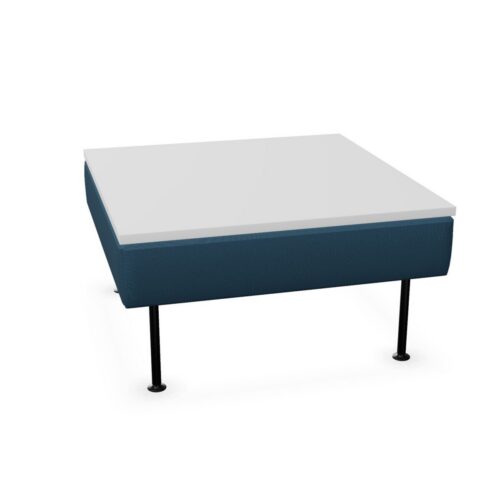


Aligning lounge furniture with square tops and blue surfaces
A square top can relate to several surrounding lines, but choosing one principal reference usually makes the arrangement easier to assess. That reference might be the front of a sofa, the direction of a corridor, or the boundary of a seating zone. Decide which relationship matters most before introducing secondary alignments.
Review the table in its intended orientation rather than assuming that all rotations produce the same result. Turning a square changes how its corners meet the surrounding circulation space. An angled position may alter the composition substantially, so compare it against the actual approach to the seats and the adjacent walking route.
Use blue to establish a consistent emphasis
With lounge furniture with square tops and blue surfaces, geometry and color can reinforce the same planning decision. A clearly aligned blue surface can identify the center of a seating group. Alternatively, repeating blue across separate groups can connect them visually while their individual positions respond to different room conditions.
Decide how prominent that repetition should be. Review the blue beside the largest surrounding color areas, including seating, walls, and flooring. A small decorative match is less useful than understanding the overall balance. Assess the surface under the room's intended lighting, including views where several blue surfaces may appear together.
