

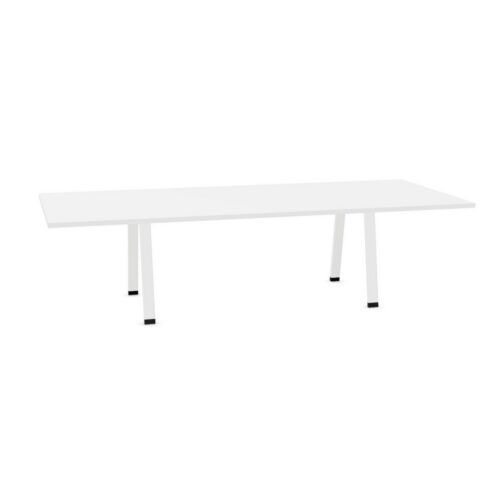
Green Bases Within Workplace Meeting Palettes

Conference tables with green bases introduce green into the part of the meeting room occupied by chair frames, flooring and the table structure. Their relevance comes from how that color relates to the existing setting. Green can be repeated elsewhere or remain a separate reference below the tabletop. Assess those alternatives through the room’s actual palette, without assuming a particular shade, construction or effect on the people using the space.

If plants, green upholstery or painted surfaces are already present, include them in the comparison without expecting identical colors. The base may be viewed against each of them from different seats. Start with the most common meeting arrangement and check the view from the entrance as well. This gives you a useful basis for deciding where green should repeat and where another color should separate the table from its immediate surroundings.

3 models
From €20.05 p/m
2 models
From €28.04 p/m
€9.29 p/m
€9.94 p/m
2 models
From €9.51 p/m
€31.41 p/m
€11.34 p/m
2 models
From €19.95 p/m
2 models
From €10.48 p/m
4 models
From €7.81 p/m
2 models
From €8.94 p/m
4 models
From €9.16 p/m
3 models
From €51.25 p/m
2 models
From €41.00 p/m
9 models
From €96.74 p/m
6 models
From €54.73 p/m

Relating Conference Tables With Green Bases to the Room

Map the existing green references before adding another. A wall, chair or planter may already make green a noticeable part of the setting, while other rooms may contain none. Decide whether the base should connect with those elements or establish a separate color point beneath the meeting surface. Compare actual appearances where possible, because green labels alone do not establish a match. If several greens share the room, use their placement deliberately. Elements directly beside the base require a different comparison from those seen only across the room or through an open doorway.

Including Plants Without Forcing a Match

Where plants are part of the workplace, treat them as surrounding visual elements rather than fixed color samples. Their appearance varies across leaves and with the light falling on them. A green base does not need to reproduce those variations to belong in the same room. Assess the complete view, including the planter and floor, to decide whether the relationship is useful. Keep plants positioned so they do not interrupt the approach to chairs or the line of sight between participants. Their placement should support the meeting arrangement alongside any visual connection to the table.

Managing Green Across Chairs and Bases

When conference tables with green bases are considered alongside green chairs, review how the two colors meet visually. A similar appearance may connect the furniture, while a clear difference can give the base and upholstery separate roles. Neither approach requires a particular shade to be successful. Include chair frames in the assessment, especially if they form a visible layer between the upholstery and base. Pull the chairs into their everyday meeting positions and check the resulting composition. A coordinated tucked arrangement should also remain coherent when participants arrive and the furniture is being used.

Testing the Palette Along Meeting Sightlines

Look from each normal seating direction toward the room's main discussion or presentation point. The green base may sit against different backgrounds depending on the view, including chair upholstery, flooring or furniture beyond the table. Decide whether it should remain noticeable across these views or become a less prominent part of the room. If another green element sits behind it, assess whether their relationship still looks deliberate from a distance. Review any adjoining workplace areas too, since an open door can bring additional colors into the composition even when those elements are outside the meeting room.

Frequently Asked Questions

Does a green base establish an environmental benefit?

No. Green identifies the selected base color only. Conference tables with green bases should not be assumed to have any environmental certification, particular material or other benefit on the basis of that color designation.

Should the base match nearby plants?

An exact match is unnecessary. Compare the overall relationship between the base, foliage, planters and floor. Position plants around clear routes and participant sightlines, then decide whether the shared green reference contributes usefully to the room.

What if the existing chairs are also green?

Review the actual colors side by side and from the entrance. Decide whether they should form a closely related group or remain visibly different, using the chair frames and surrounding floor as part of that comparison.

Explore related selections