

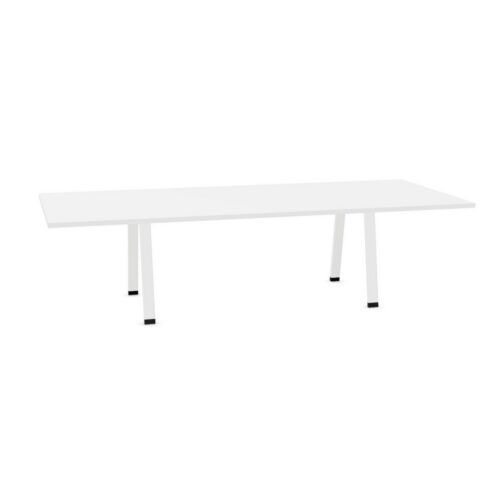
Gray Bases for Coordinated Conference Spaces

Conference tables with grey bases give the meeting area a gray color reference beneath the tabletop. That reference can connect with existing furniture or create a separate layer within the room palette, depending on the surrounding colors. The selection establishes base color only. Assess its actual appearance beside the floor and chairs before deciding whether it provides the degree of contrast you want for the seating area.

Gray is often repeated across office interiors, but those repetitions are not necessarily identical. A chair frame, storage unit and floor can all be described as gray while looking noticeably different together. Treat the base as part of that comparison rather than assuming an automatic match. Look at the room in its normal meeting arrangement, including chairs pulled away from the table and the route participants take from the entrance to their places.

2 models
From €18.78 p/m
11 models
From €21.26 p/m
10 models
From €16.65 p/m
9 models
From €22.04 p/m
3 models
From €125.11 p/m
3 models
From €20.05 p/m
2 models
From €28.04 p/m
€9.29 p/m
€9.94 p/m
2 models
From €9.51 p/m
€31.41 p/m
€11.34 p/m
2 models
From €19.95 p/m
2 models
From €10.48 p/m

Comparing Conference Tables With Grey Bases

Identify which existing gray elements will sit closest to the base. Their relationship will usually be more apparent than a connection to a distant wall or cabinet. Compare these neighboring colors together, then decide whether the base should blend into the group or remain distinct. A purposeful difference can be easier to coordinate than several near matches that do not quite align. Include both the chair frames and upholstery in this review. Their combined appearance may influence the seating area more strongly than any isolated color comparison made before the room is arranged.

Establishing Contrast Without Adding Clutter

If the room already contains several gray surfaces, consider where a clear visual distinction would be useful. The chairs, a surrounding wall or the floor may provide that distinction without requiring additional decorative elements. Review the table base against its immediate background, then step back to assess the complete room. A base that appears separate at close range may become less noticeable from the doorway. Decide which reading supports the room's intended appearance. Furniture placement should continue to define clear approaches and exits, rather than relying on contrasting colors to explain where people should move.

Linking Shared Rooms With Different Uses

Conference tables with grey bases can be considered within a workplace where meeting rooms share some colors but serve different activities. A repeated base color may provide continuity, while upholstery or wall colors distinguish the individual settings. Assess the visible relationship between adjacent rooms instead of requiring every piece of furniture to match. In a room used for both discussion and presentations, review the arrangement facing each main direction. The same base can appear against different backgrounds depending on where someone sits, so the useful comparison includes the occupied seating area as well as the entrance view.

Making Lighting Part of the Comparison

Check the gray base color under the lighting normally used during meetings. Adjacent colors can appear different as daylight changes or electric lighting is adjusted, so a decision made in another room may not translate directly. Look particularly at places where the base overlaps visually with chair frames or storage behind it. If those colors become difficult to distinguish, decide whether that continuity is desirable. You may choose a clearer contrast elsewhere in the furniture arrangement. The objective is a coherent room palette based on observed relationships, without assuming an exact gray match from a shared color label.

Frequently Asked Questions

Will a gray base match all gray chairs?

No. Gray color references can differ in actual appearance. Compare the base with complete chairs under the room's usual lighting, and decide if you want a close relationship or a more visible distinction between them.

What else does the base color establish?

The chosen property establishes color only. Conference tables with grey bases should not be assumed to share a material, construction, surface treatment or technical feature simply because their bases have the same color designation.

How can the room avoid looking overly uniform?

Introduce a deliberate difference through an existing wall, the floor or chair upholstery. Assess that choice across the complete room, keeping the palette coordinated while allowing the seating area and surrounding furniture to remain visually distinct.

Explore related selections