



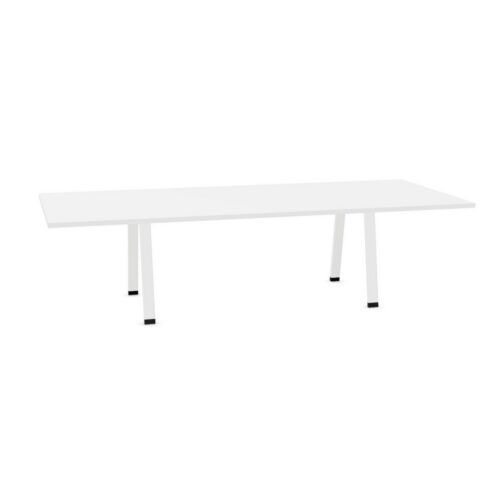


Arranging Conference Tables With Rectangular Tops and White Surfaces
Use the straight sides as a starting point for chair alignment, then adapt the arrangement to the meeting format. Participants facing across the table may have a useful conversation layout while needing to turn for a screen presentation. End positions have a different relationship with both the side seats and the display. Check those views before assigning regular places. The rectangle gives a clear outline, but it does not establish a meeting hierarchy by itself. A presenter, shared document area or writing wall can shift attention toward another part of the room during a session.
Distinguish White From Its Surroundings
When considering rectangular conference tables with white surfaces, compare the tabletop with nearby pale walls, chairs and storage. Similar color descriptions do not guarantee the same appearance together. Decide whether the table should blend into the room palette or remain visually distinct through its relationship with the floor and seating. Include ordinary papers and notebooks in the comparison, since these will often cover part of the surface. Avoid attributing a particular finish or lighting behavior to white alone. Assess the actual room composition from the entrance and from the places participants will occupy.
Check Corners Along the Main Walking Route
A rectangular tabletop introduces corners that need to be considered when planning movement through the room. Trace the route from the door to side and end chairs, including the point where someone turns around a corner. Keep that route clear when chairs are pulled out and attendees have placed their belongings nearby. Check access to storage or a writing wall during the meeting, not just movement at arrival. A table aligned with the room can still create an awkward approach if an end chair or open cupboard interrupts the principal path to a seat.
