



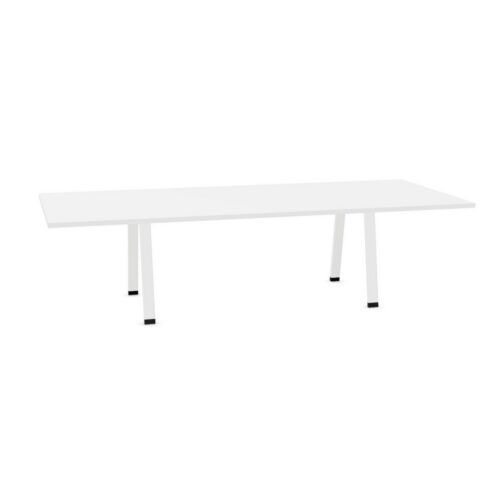


Establishing Emphasis With Conference Tables With Red Bases
Decide which part of the meeting room should attract attention when someone enters. If the table base is intended to provide the main color accent, review whether nearby furniture competes with that role. If red already appears prominently elsewhere, the base may serve as a repeated reference instead. Both approaches depend on the complete setting rather than the color name alone. Look from the doorway toward the usual meeting position and assess the sequence of visible elements. The table, chairs and presentation area should form an understandable arrangement even before their individual colors are considered.
Coordinating Red Without Repeating It Everywhere
A red base does not require red upholstery, storage and wall details throughout the room. Selective repetition may be enough to establish a connection with the wider workplace. Compare any existing reds directly, since similar descriptions can refer to visibly different colors. You can retain those differences as part of a deliberate palette or give each red element more visual separation. Consider how much of each color remains visible once chairs are occupied. The balance in an empty meeting room can differ from the view during a discussion, when people interrupt the sightlines between furniture elements.
